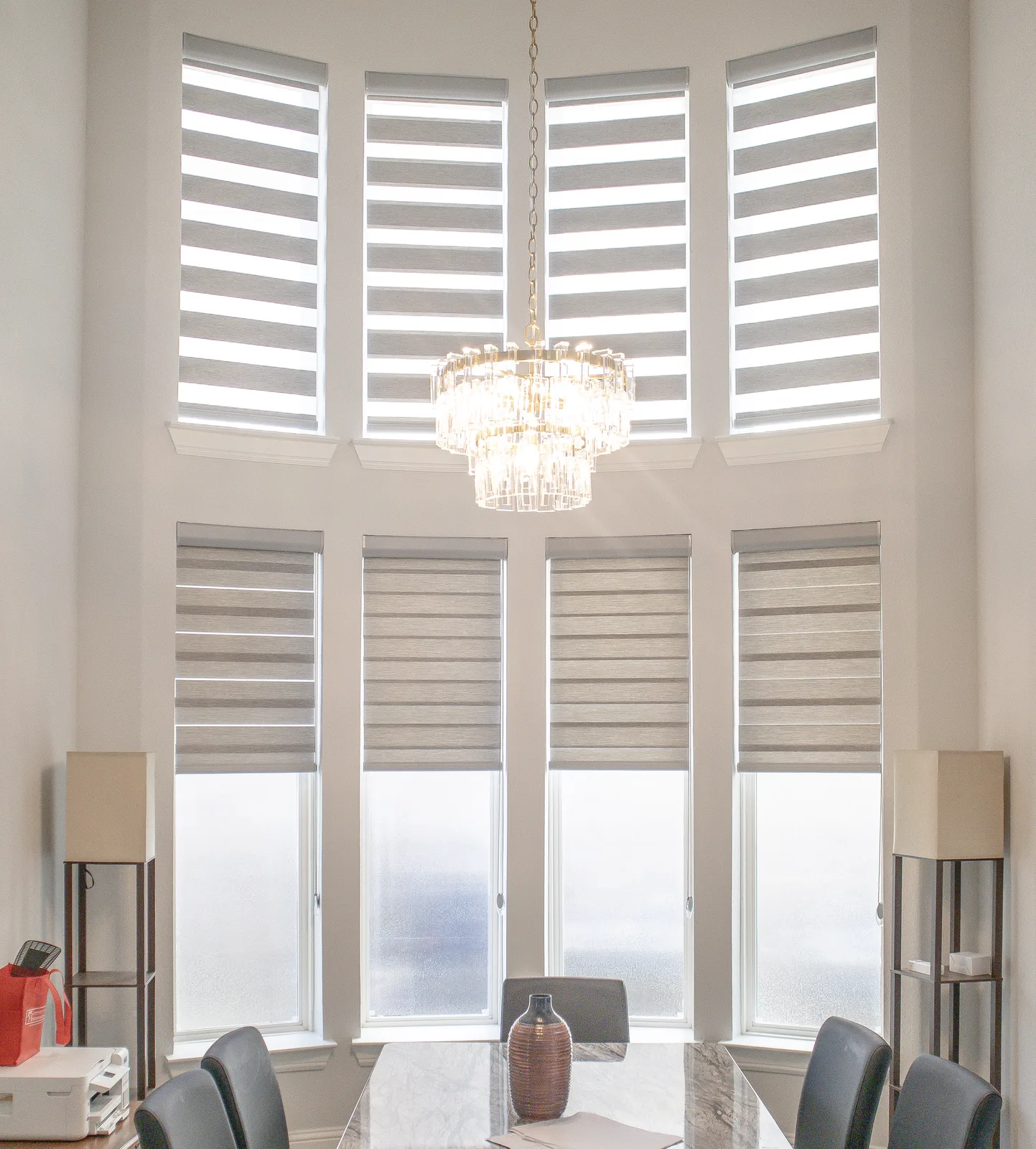
Most people who walk into one of our DFW showrooms know two things: they have windows, and the afternoon sun is a problem. What they usually don’t know is what to call the thing they want. “Blinds” gets used for everything, and in the homes we work in, blinds turn out to be the least common choice.
This guide walks through the five families of window treatments we install every week around Dallas-Fort Worth, with photos from our own jobs. By the end you should be able to look at a room and know which one or two to ask about.
What a window treatment does
Every product below solves some mix of the same four jobs. Light: how much comes in, and whether you can adjust it during the day. Privacy: from the street, from a neighbor’s second floor, at night with the lights on. Heat: in North Texas this is the one people underestimate, because a west-facing window in August can turn a room into an oven by 4 p.m. And the look, since the treatment covers more wall than most furniture and sets the tone of the room.
No single product does all four well, which is why the choice deserves ten minutes of thought.
Shades
Shades are one continuous piece of fabric that rolls or folds up. They are the biggest category in our showrooms and the one with the widest price range. Four kinds come up over and over.
Zebra shades
Our most-installed product, and the one most people haven’t heard of by name. A zebra shade (also called a dual shade or day-night shade) is made of alternating sheer and solid bands on a continuous loop. Roll it one way and the solid bands line up for privacy. Roll it a little further and the sheer bands line up to let light through. Roll it all the way up and it disappears into the headrail.
That adjustability is why zebras have replaced two-inch blinds in so many of the homes we do. You get the open-and-closed control of slats in a soft fabric that doesn’t collect dust or clatter when the air conditioning kicks on. Most fabrics are light-filtering. Blackout versions exist, but the sheer bands still let a thin line of light through, so for a truly dark bedroom a blackout roller shade is the safer pick.
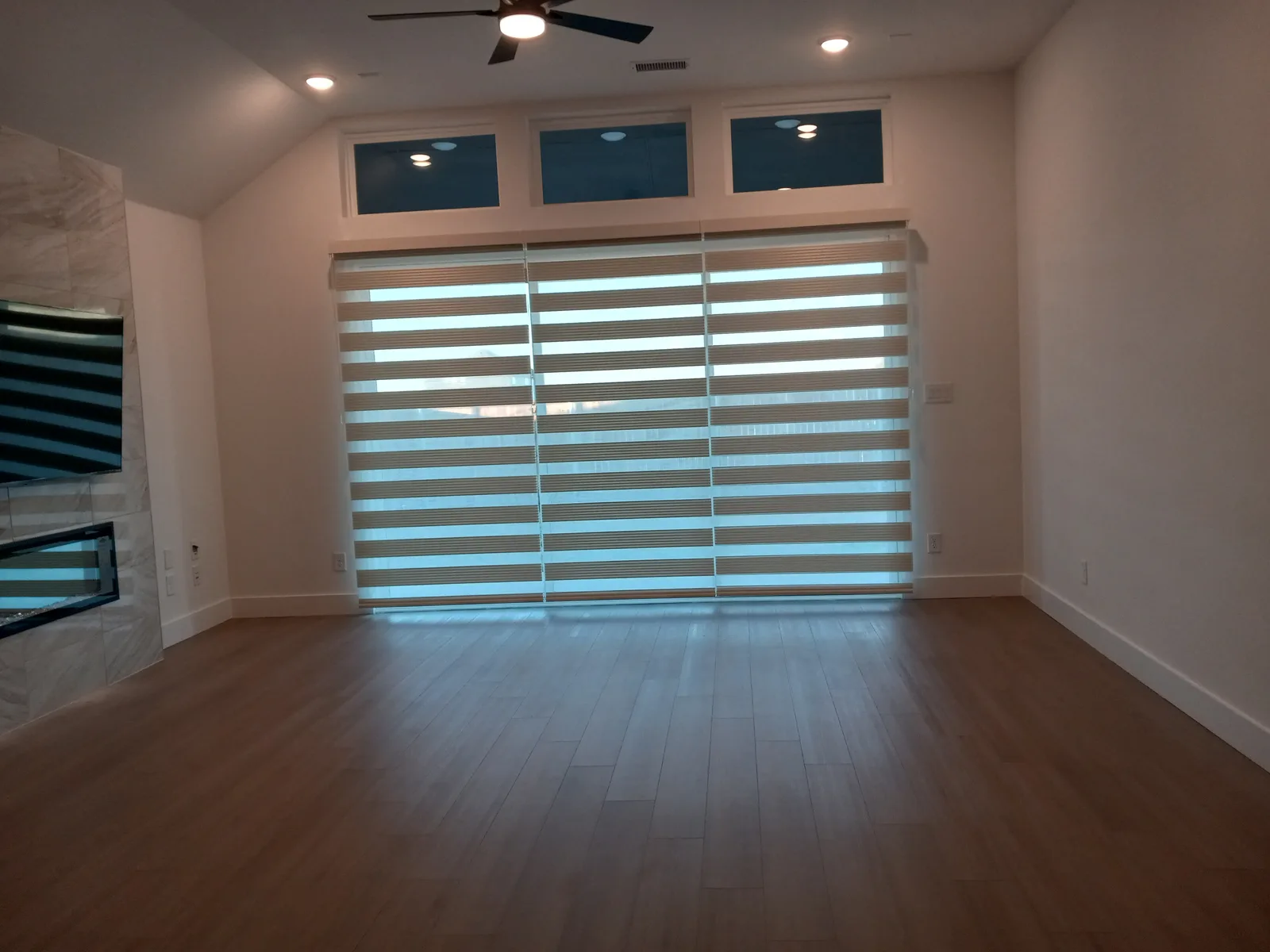
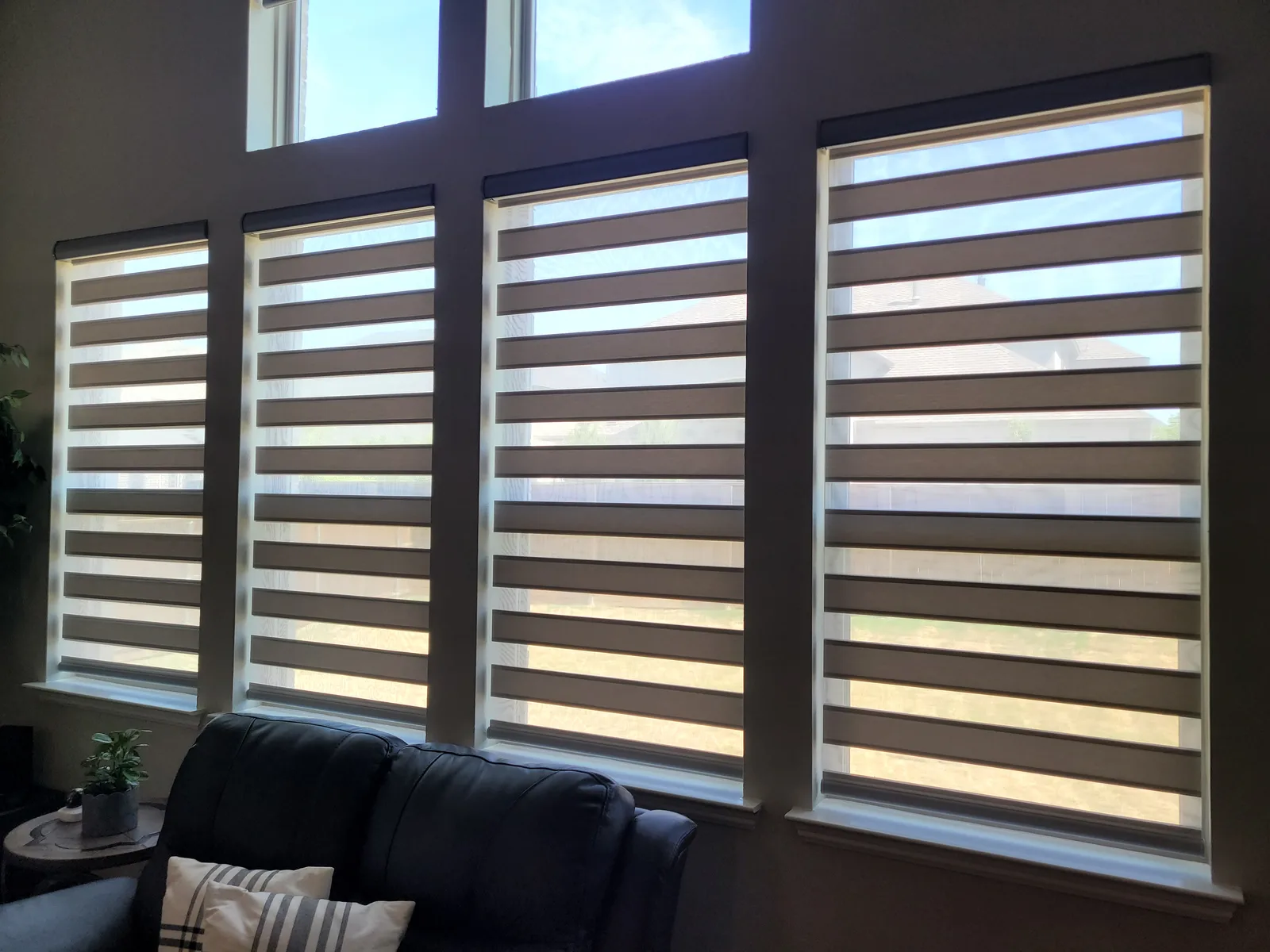
Product page: Zebra Shades
Roller shades
The simplest window treatment there is: a fabric panel on a tube, raised and lowered by chain or motor. The fabric decides everything. Light-filtering fabrics soften daylight and give daytime privacy. Blackout fabrics stop light completely, which is why bedrooms and media rooms get them. Solar fabrics (below) are a roller shade with a special weave.
Rollers stack into a small tube at the top, so a big window keeps its full view when the shade is up. They look clean on modern homes with lots of glass. The trade-off is that the fabric fixes the light level. You can raise or lower the shade, but you can’t tilt it open the way you can with slats.
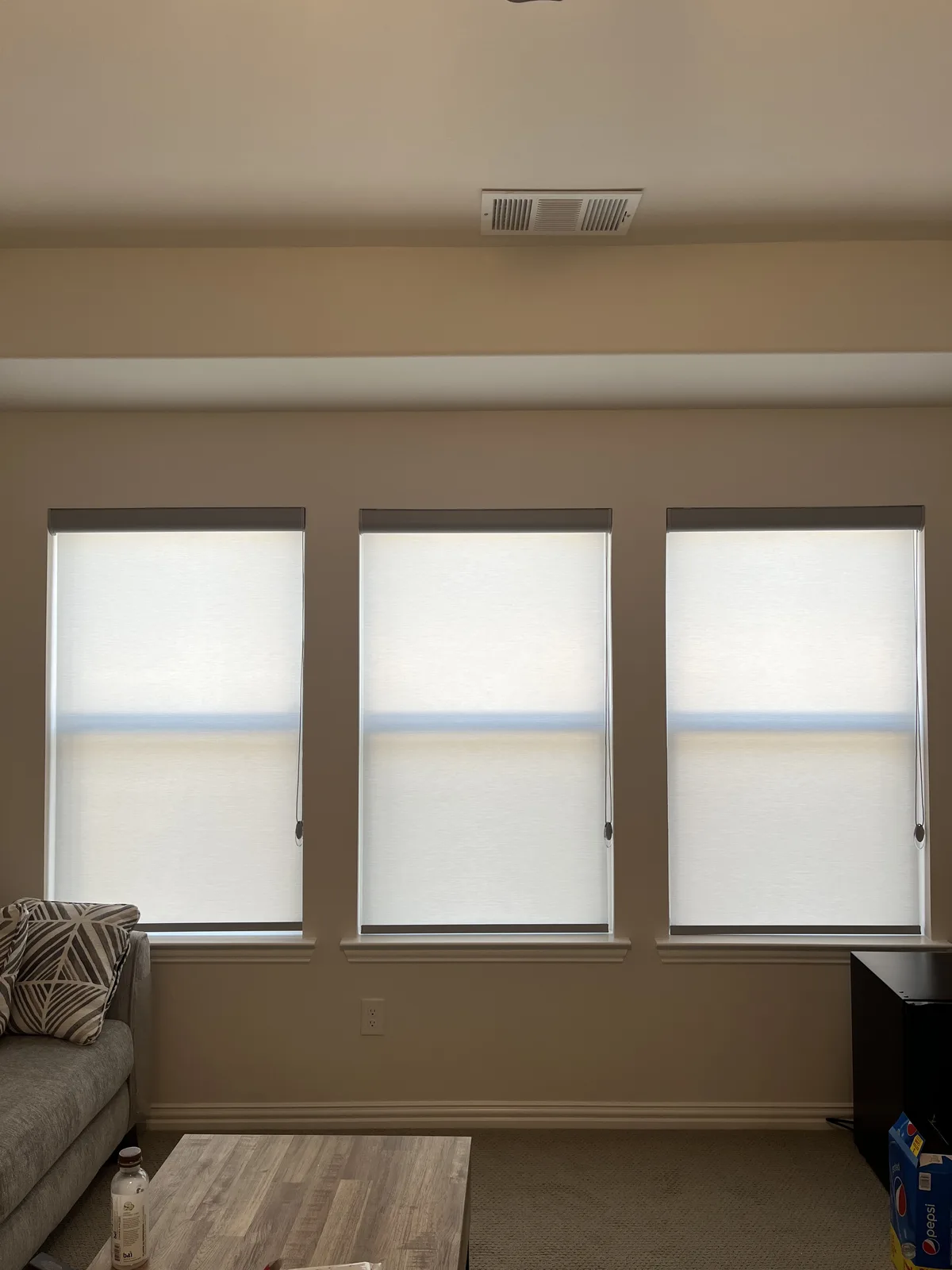
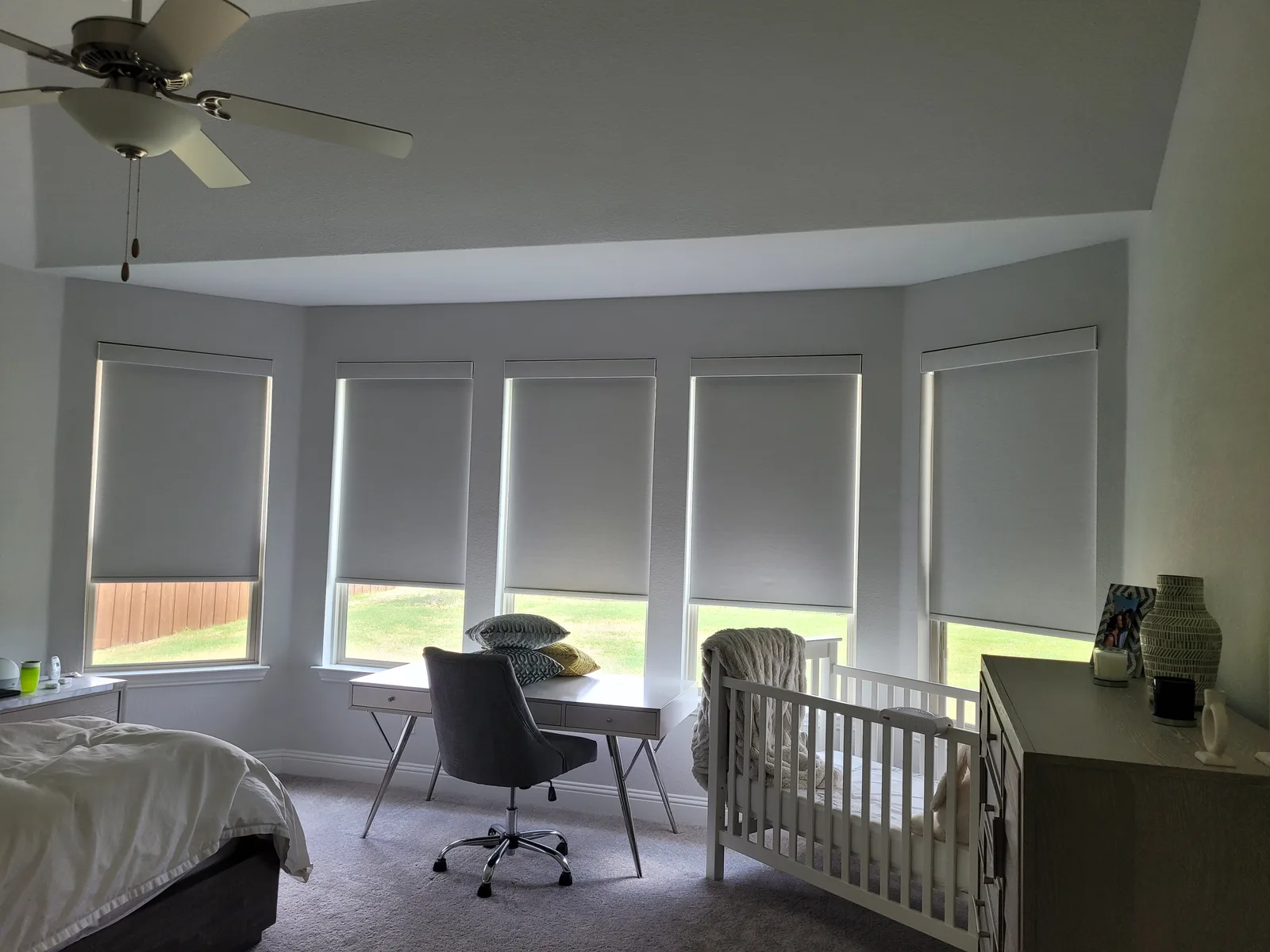
Product pages: Roller Shades and Blackout Shades
Sunscreen
A roller shade made from an open-weave screen fabric. You can see out through it during the day, and it blocks most of the glare and the UV that fades floors and furniture. It comes in 1% and 3% openness: 1% blocks more, and 3% keeps more of the view.
Sunscreen is the answer for big west- and south-facing glass where you want the view without the heat: living rooms that look onto the backyard, sunrooms, offices, storefronts. During the day people outside can’t see in, which is why businesses like it. What it doesn’t give you is nighttime privacy. With the lights on inside, sunscreen is see-through from outside. Pair it with drapery, or choose a different product for bedrooms.
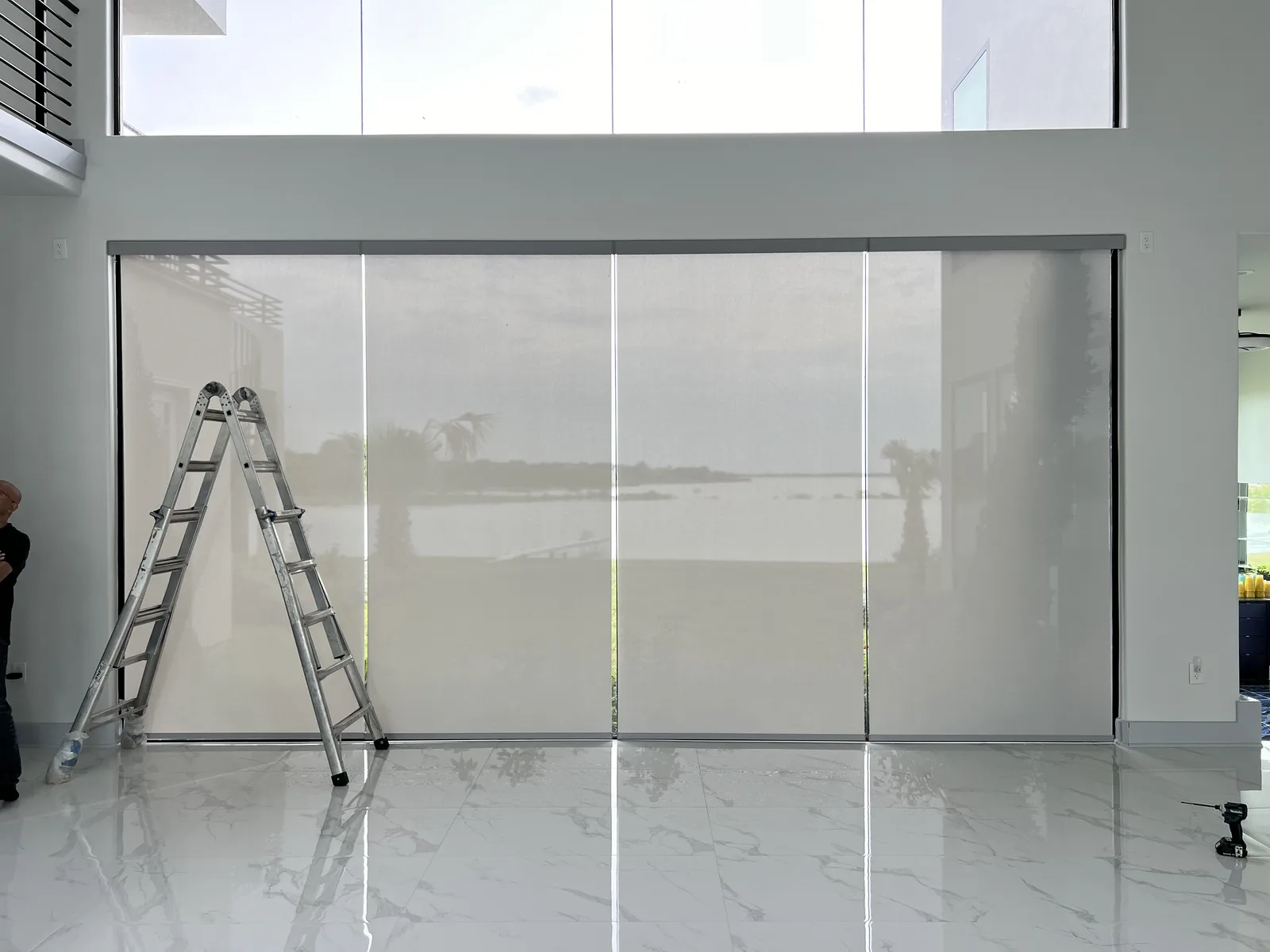
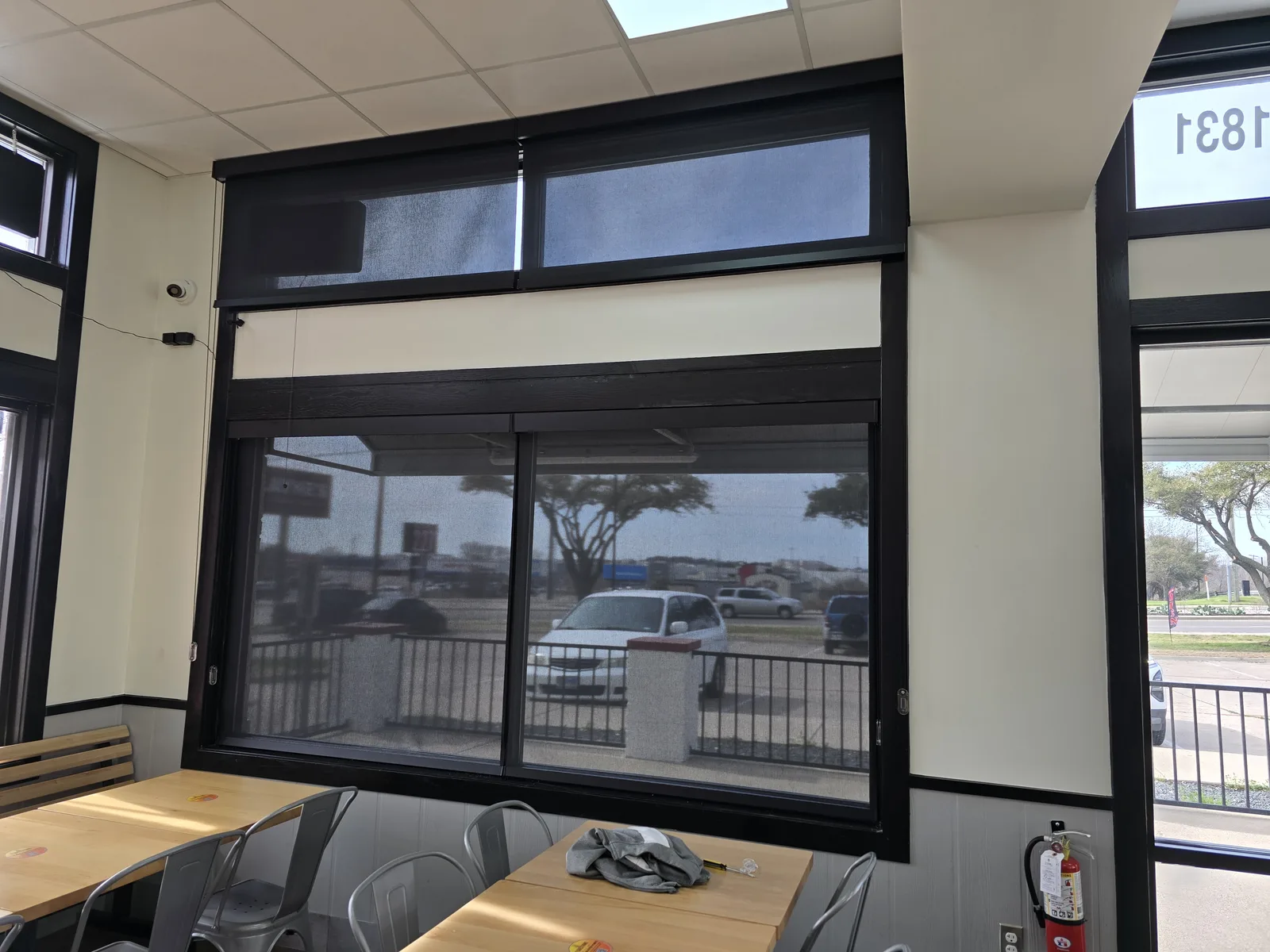
Product page: Solar Screen
Triple shades
Picture a sheer curtain with soft fabric vanes suspended inside it. The vanes tilt open for a filtered view or close for privacy, and the whole shade rolls up when you want the window bare. Triple shades give the most finished, upholstered look in the shade family, and they’re the usual pick for a master bedroom or a formal living room where the window is a feature.
They cost more than rollers or zebras, and the sheer facing means they aren’t the product for a kitchen sink window or a playroom.
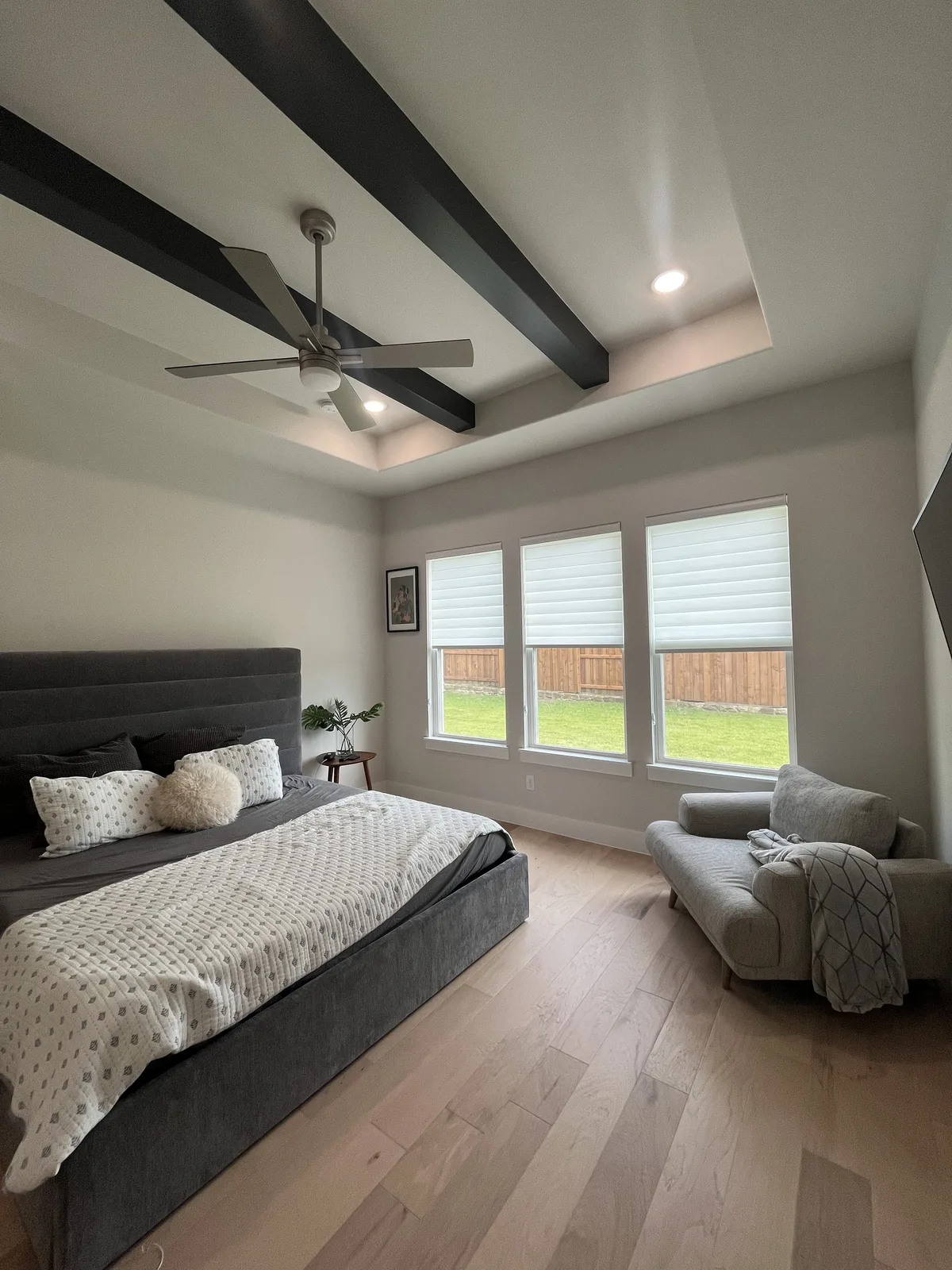
Product page: Triple Shades
Honeycomb shades
Also called cellular shades. The fabric is folded into hexagonal pockets that trap a layer of air against the glass, which makes them the best insulator in the shade family. They suit a nursery or any window where the heat coming through the glass is the main complaint. We install fewer of these than zebras, so ask in the showroom if you want to see samples.
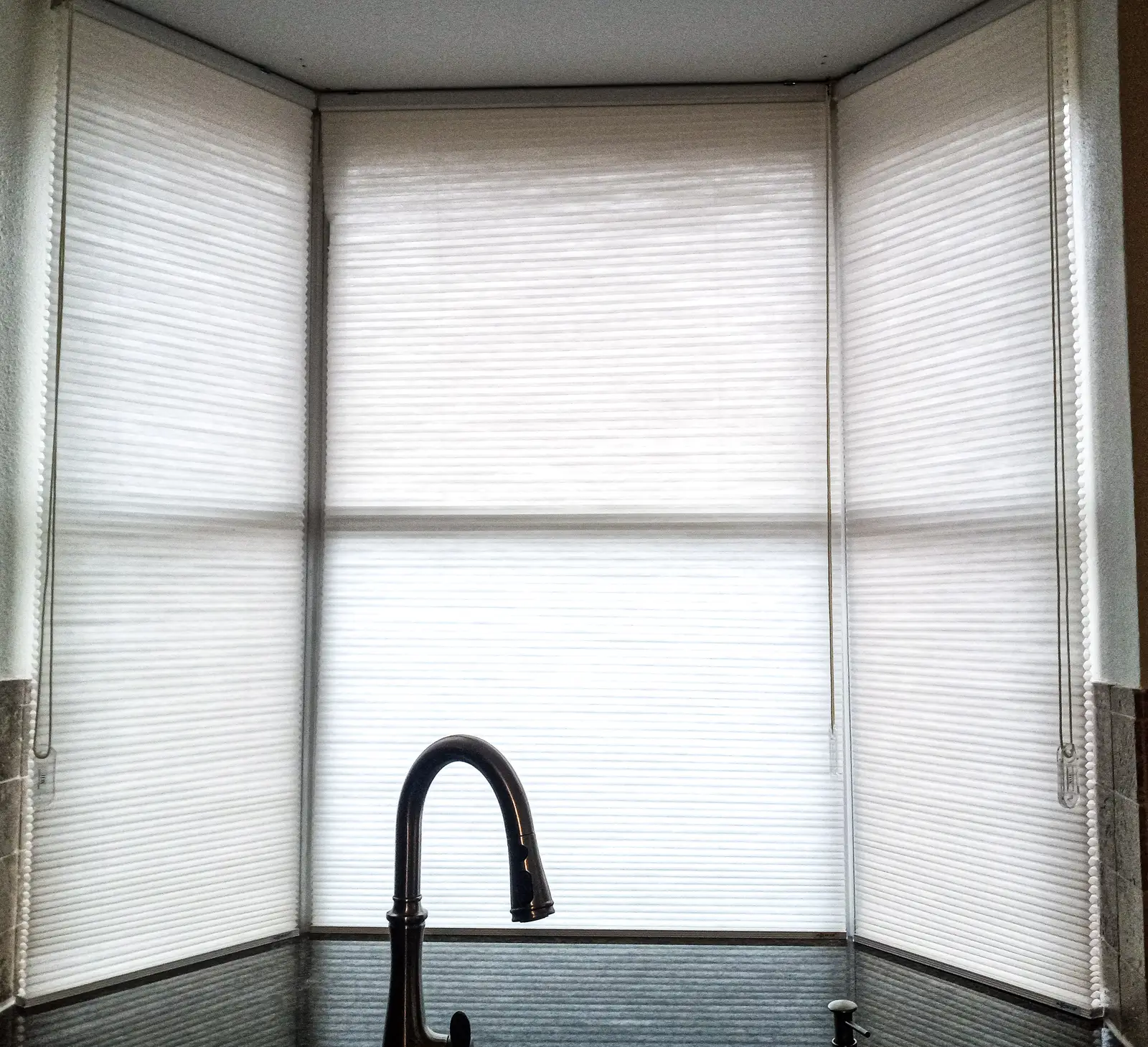
Product page: Honeycomb Shades
Shutters
Plantation shutters are a wood or composite frame built into the window opening, with wide louvers that tilt on a rod. They’re closer to millwork than to a window covering. They get painted or stained to match the trim, and they stay with the house when it sells.
Shutters give fine light control (tilt the louvers a few degrees at a time), full privacy, and a look that suits both older brick homes and newer farmhouse-style builds. They’re also the most durable option here; a well-made shutter outlasts every fabric product. In exchange you pay more, wait longer since each panel is built to the window, and give up a little glass to the frame even when the louvers are open.
Three materials. Poly is a solid composite that won’t warp in bathrooms or kitchens. Painted wood is lighter, so it can span wider openings. Stained wood shows the grain, for a warmer room.
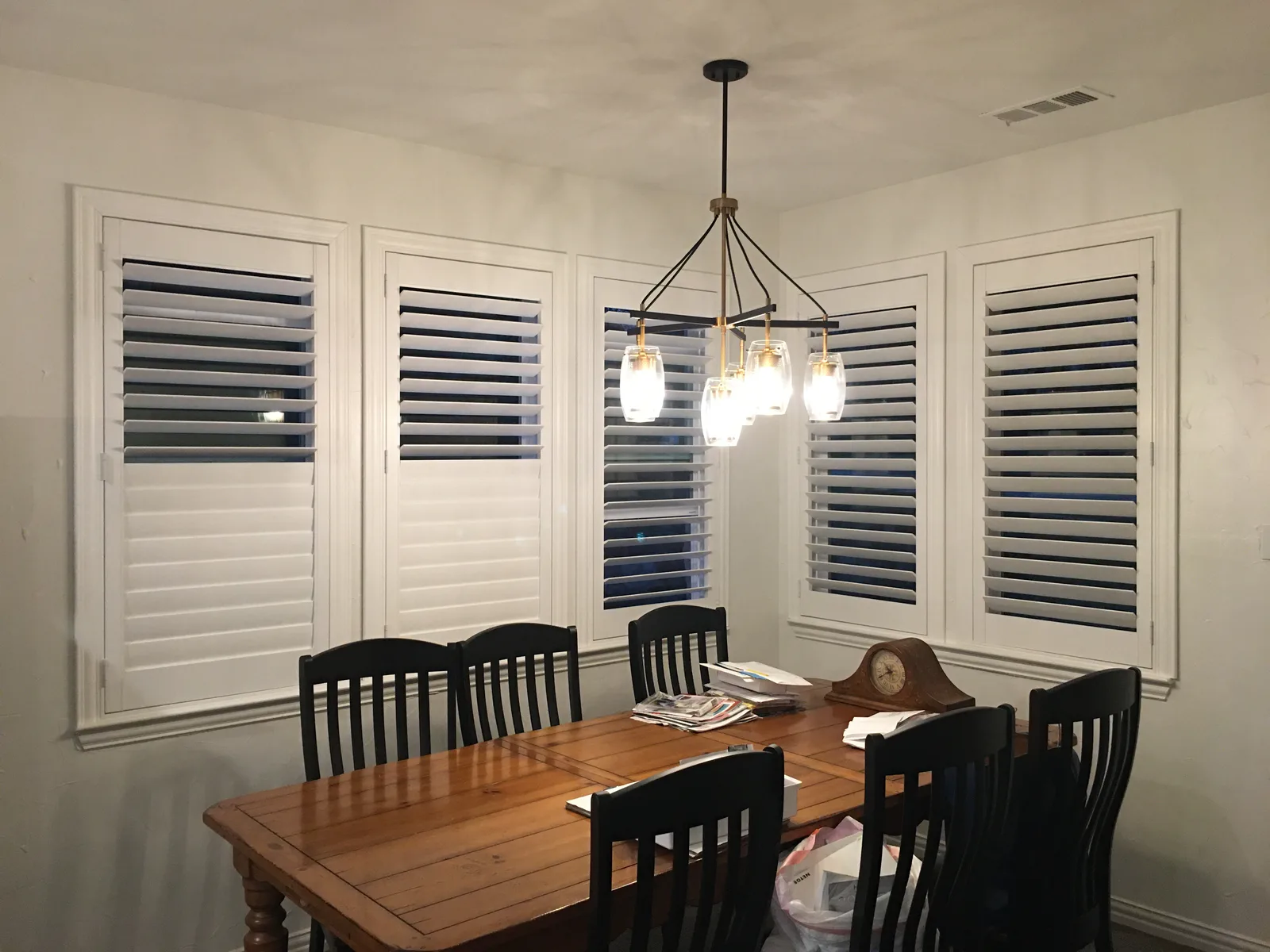
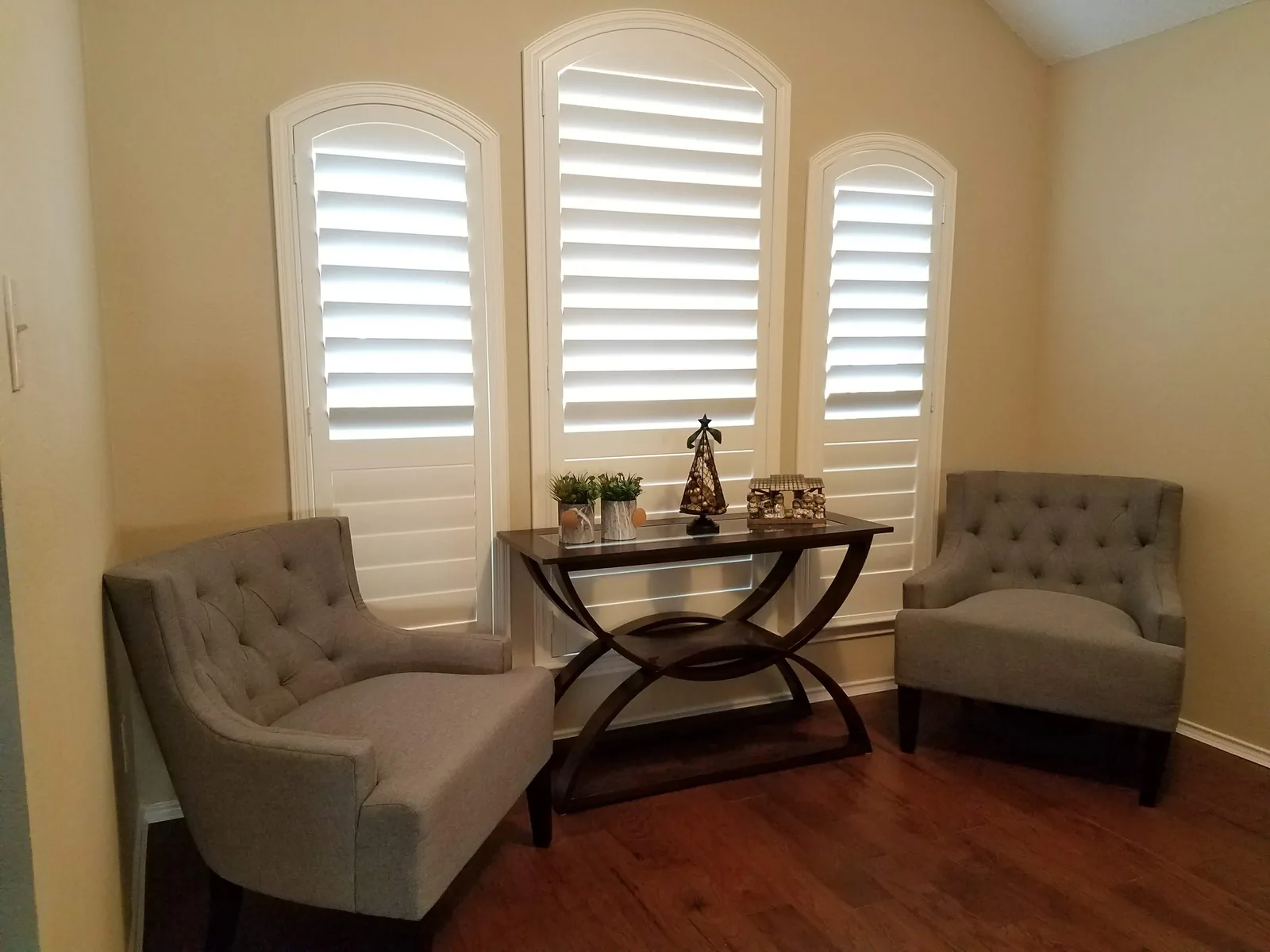
Product page: Shutters
Blinds
Horizontal blinds are what most of us grew up with: individual slats on a ladder cord that tilt open and closed and pull up to the top. Two-inch wood and faux wood blinds are the version worth buying. Faux wood (a PVC composite) handles humidity and costs less; real wood is lighter and comes in more stains.
Blinds are the lowest-cost way to get adjustable light control, and they’re easy to match across every window in a house. The downsides are the ones you already know. Slats collect dust, and a wide window needs a heavy blind that’s tiring to raise. Homeowners who start out asking for blinds often end up with zebra shades in the main rooms and keep faux wood blinds for bathrooms, garages, and secondary windows.
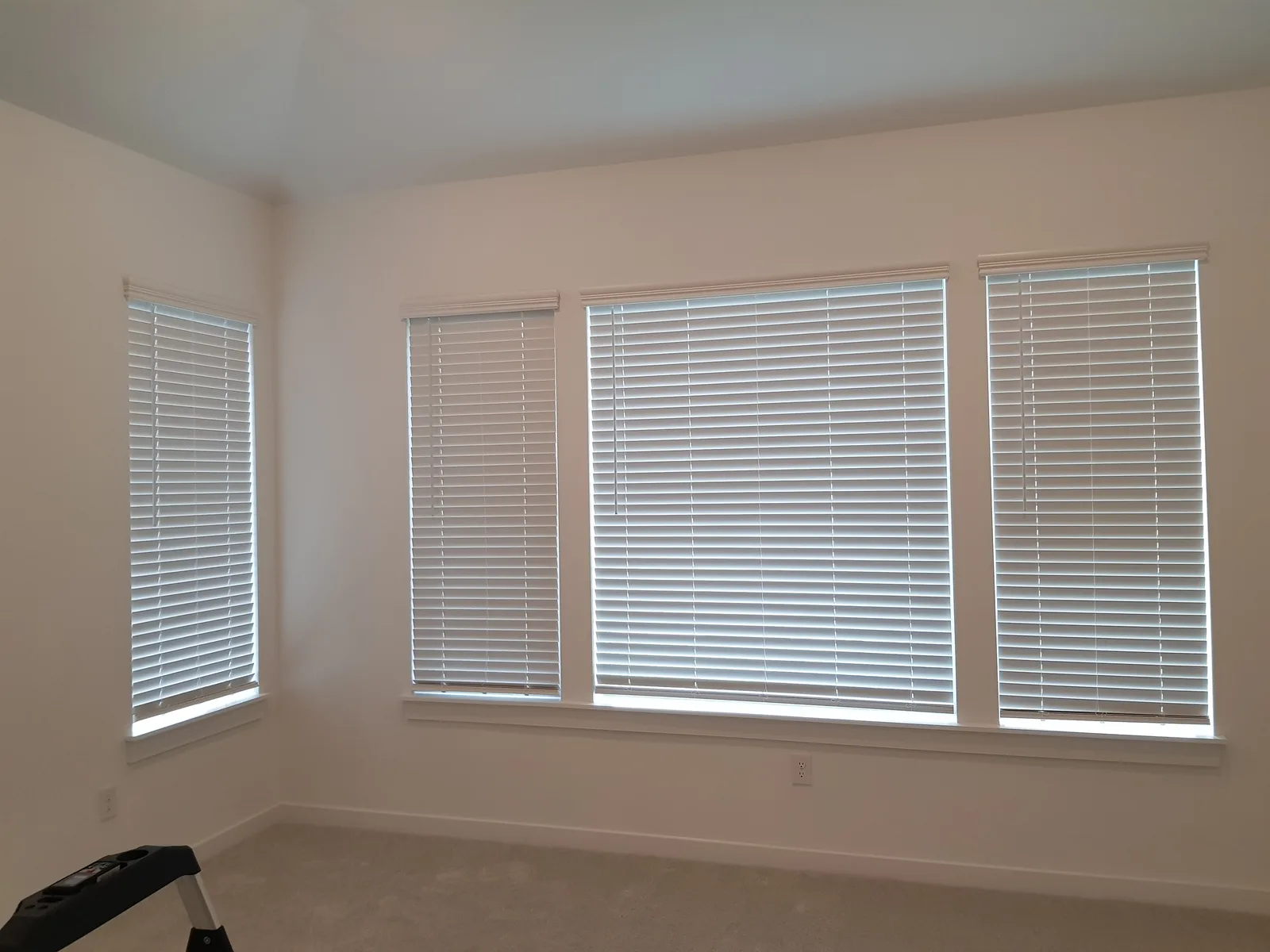
Product page: Wood / Faux Wood Blinds
Curtains and drapery
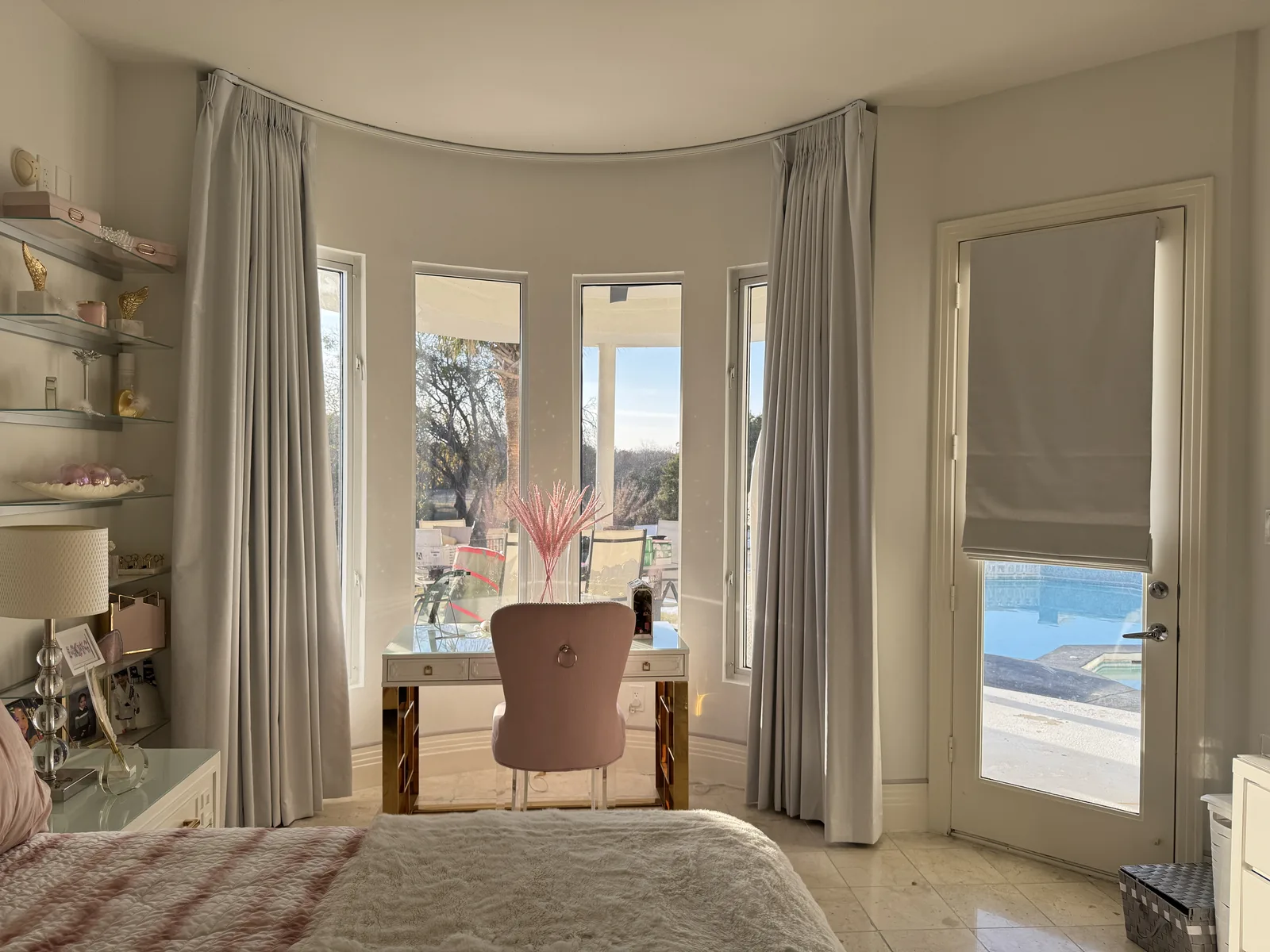
Fabric panels on a rod or track. Curtains are the softest look in the room and the only treatment sewn to a specific fabric, lining, and length. Floor-length drapery makes a tall window read even taller. Blackout-lined drapery is also the most complete light block available, because the fabric covers past the window frame on every side.
Curtains are rarely the whole answer on their own. They’re either open or closed, and they take up wall space on either side of the window. Most of the drapery we install goes over a shade or shutter as a second layer, for the look and for the extra darkness at night.
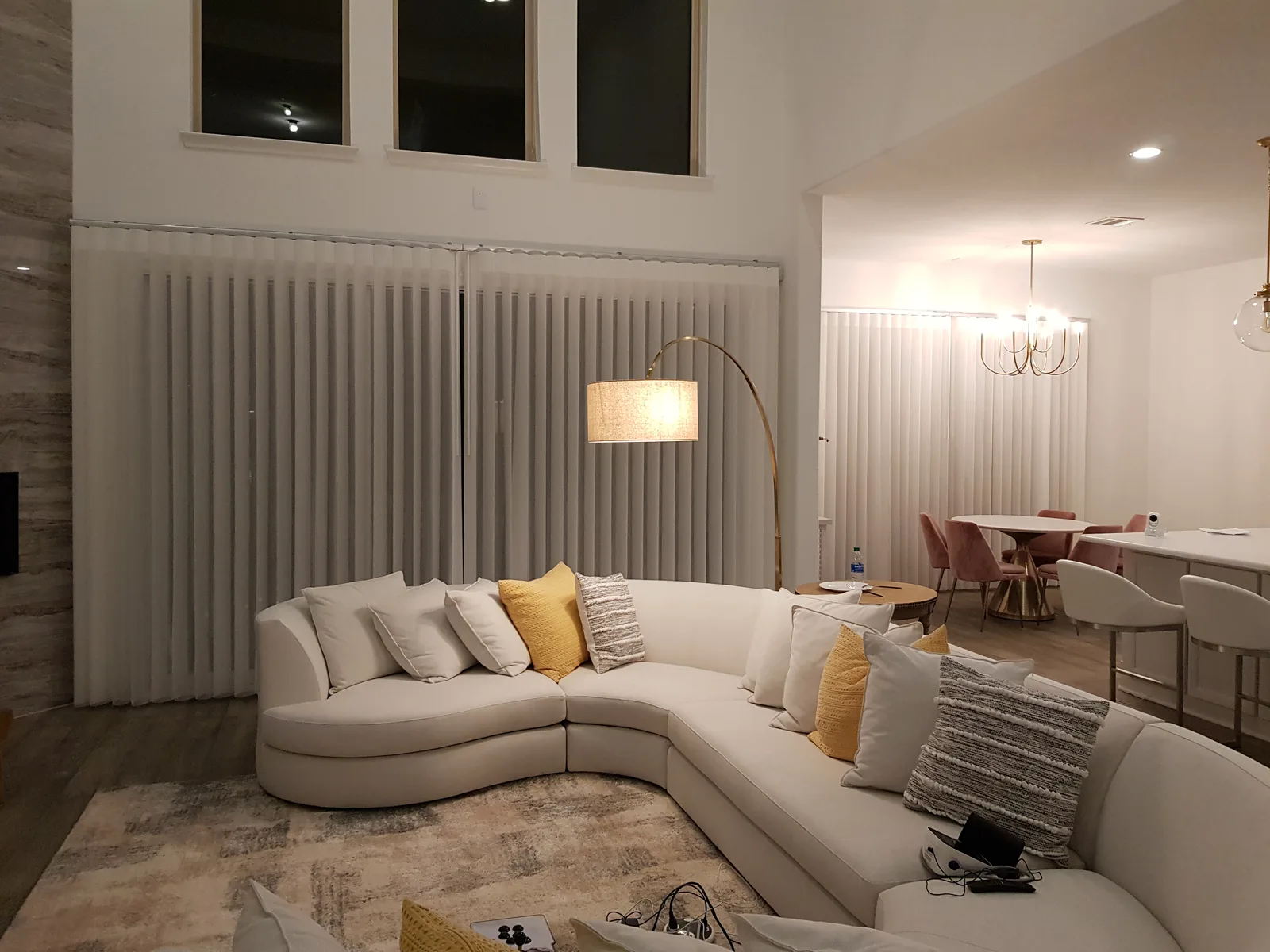
One more product lives in this family. Smart curtains are S-shaped fabric vanes hanging from a track. They look like sheer drapery when closed, tilt like a vertical blind for light control, and slide fully to one side. For a sliding glass door or a wall of glass in a modern home, they do the job of curtains without the rod hardware.
Product pages: Curtains and Smart Curtains
Patio screens
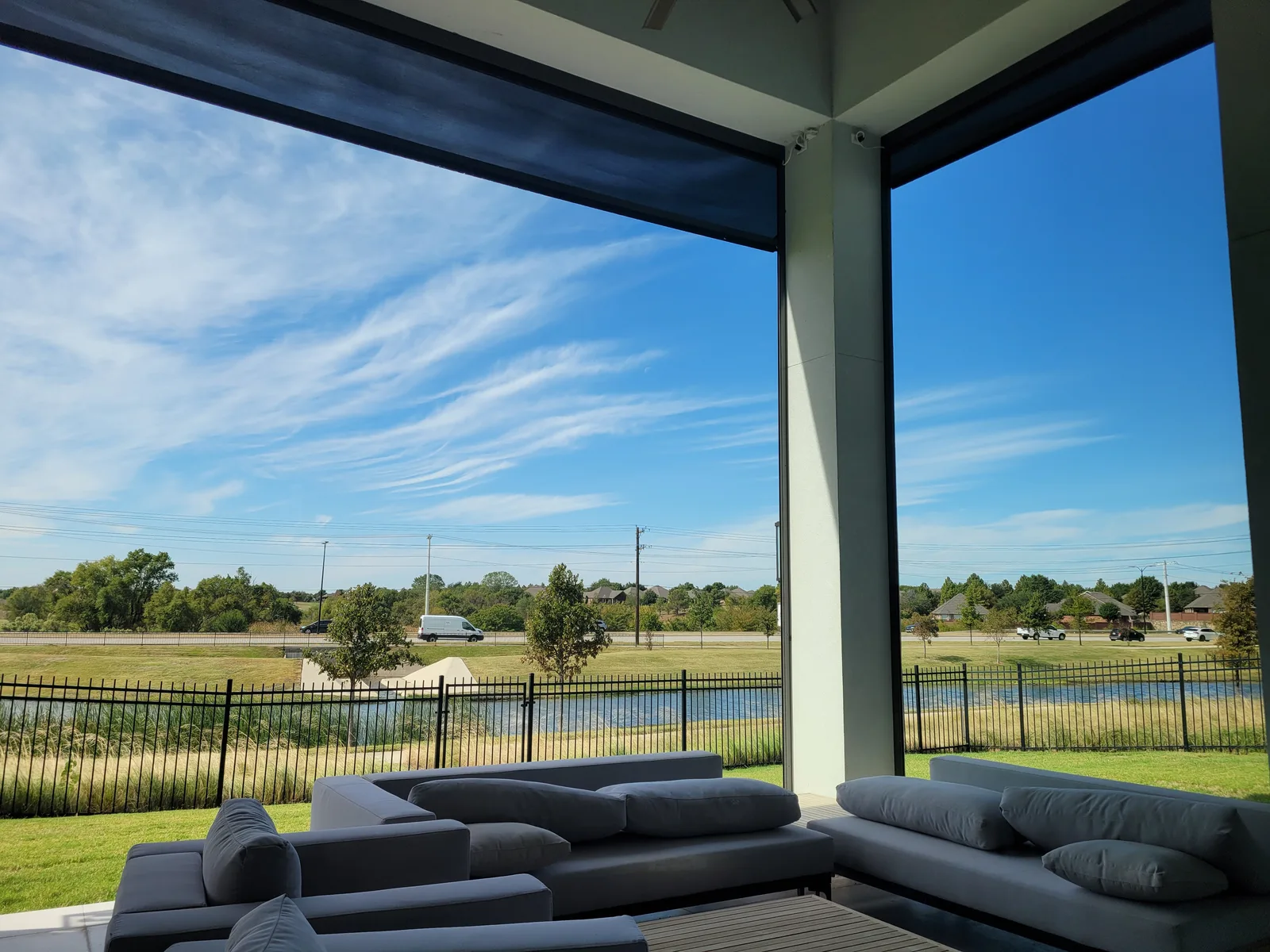
The one treatment on this list that goes outside. A patio screen is a large roll-down screen mounted at the edge of a covered patio or pergola. Lower it and you have a shaded outdoor room that keeps out the low evening sun and most of the mosquitoes. Roll it up and the patio is open again. Nearly every one we install is motorized, since the panels are too big to crank comfortably.
For a DFW home with a covered patio that nobody uses from 3 to 7 p.m. in summer, this is often the product that gets the most daily use. The screen fabric is rated by openness like sunscreen, and darker colors give a clearer view out.
Product page: Patio Screen
Motorization
Any shade, and most of the other products, can be motorized. It stops being a luxury the moment you have a window you can’t reach, a row of five shades you’d otherwise raise one at a time, or a patio screen. Motors run on rechargeable batteries or hardwired power and can be set on a schedule or tied to a smart home hub. Decide this before ordering, because adding a motor later usually means replacing the shade.
Product page: Motorized
How to choose
| If the room is… | Start with |
|---|---|
| A bedroom that needs to be dark | Blackout roller shade, or drapery over a shade |
| A living room with big glass and a view | Sunscreen or zebra shade |
| A kitchen or bathroom | Poly shutter, faux wood blind, or zebra shade |
| A formal dining room or master bedroom | Triple shade, shutter, or drapery |
| A sliding glass door | Smart curtains or zebra shade |
| A covered patio | Patio screen |
| The whole house, on a budget | Zebra shades in main rooms, faux wood blinds elsewhere |
Two more questions settle most of the rest. Do you want to adjust the light during the day (slats, louvers, zebra, triple) or just open and close (roller, drapery)? And do you want something that stays with the house (shutters) or something you can change with the décor (fabric)?
Common questions
What’s the difference between blinds and shades?
Blinds have hard slats that tilt. Shades are a single piece of fabric that rolls or folds. In everyday speech people say “blinds” for both, and that’s fine. We’ll know what you mean.
Which is best for the Texas heat?
Sunscreen and honeycomb shades block the most heat at the glass. Shutters and blackout roller shades also help because they reflect light back out. For a patio, a patio screen.
Inside mount or outside mount?
Inside mount sits within the window frame and looks cleaner; it needs about two inches of depth. Outside mount goes on the wall or trim above and covers the whole opening, which blocks more light around the edges. We measure and tell you which one your windows can take.
How long does it take?
Most shades and blinds are ready to install in two to three weeks. Shutters and custom drapery take longer because they’re built to order.
Do you come to the house?
Yes. We measure in your home, bring samples, and install. You can also start at any of our showrooms across DFW.
Not sure which one fits your window? Request a free in-home consultation or call (972) 998-5824. If you stop by a showroom, bring a photo of the room. It’s the fastest way to narrow it down.