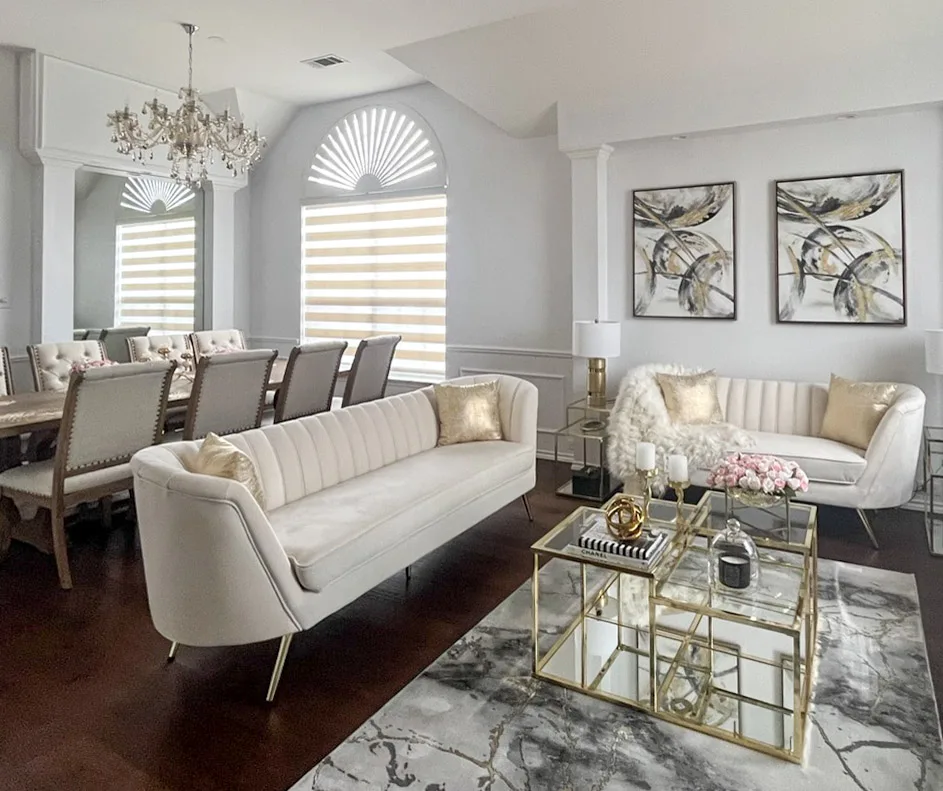
Most homes we work in around Dallas-Fort Worth end up with shades on the windows, and choosing them goes faster when you make the decisions in a set order. Pick the type of shade first. Then decide how much light each room should get, how you want to raise and lower the shades, and finally the fabric and color.
This guide follows that order with photos from our own installs. If you are still deciding between shades, shutters, and curtains, start with Window Treatments 101 and come back here.
Types of window shades
Zebra shades are our most-installed product, and roller shades cover most of the rooms a zebra doesn’t, so these two get most of the space below. The other shades are worth knowing about for particular windows.
Zebra shades
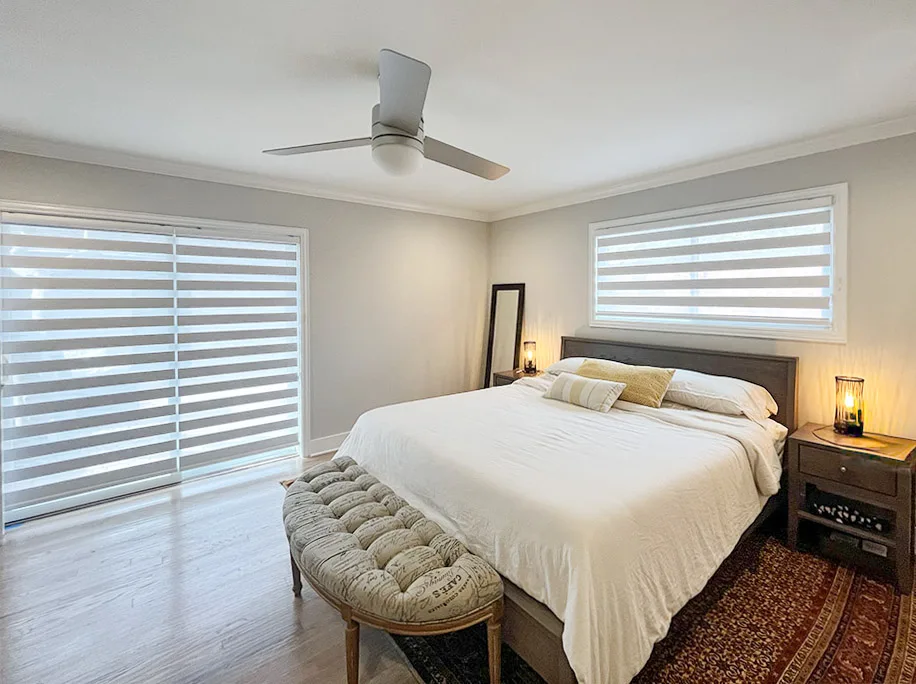
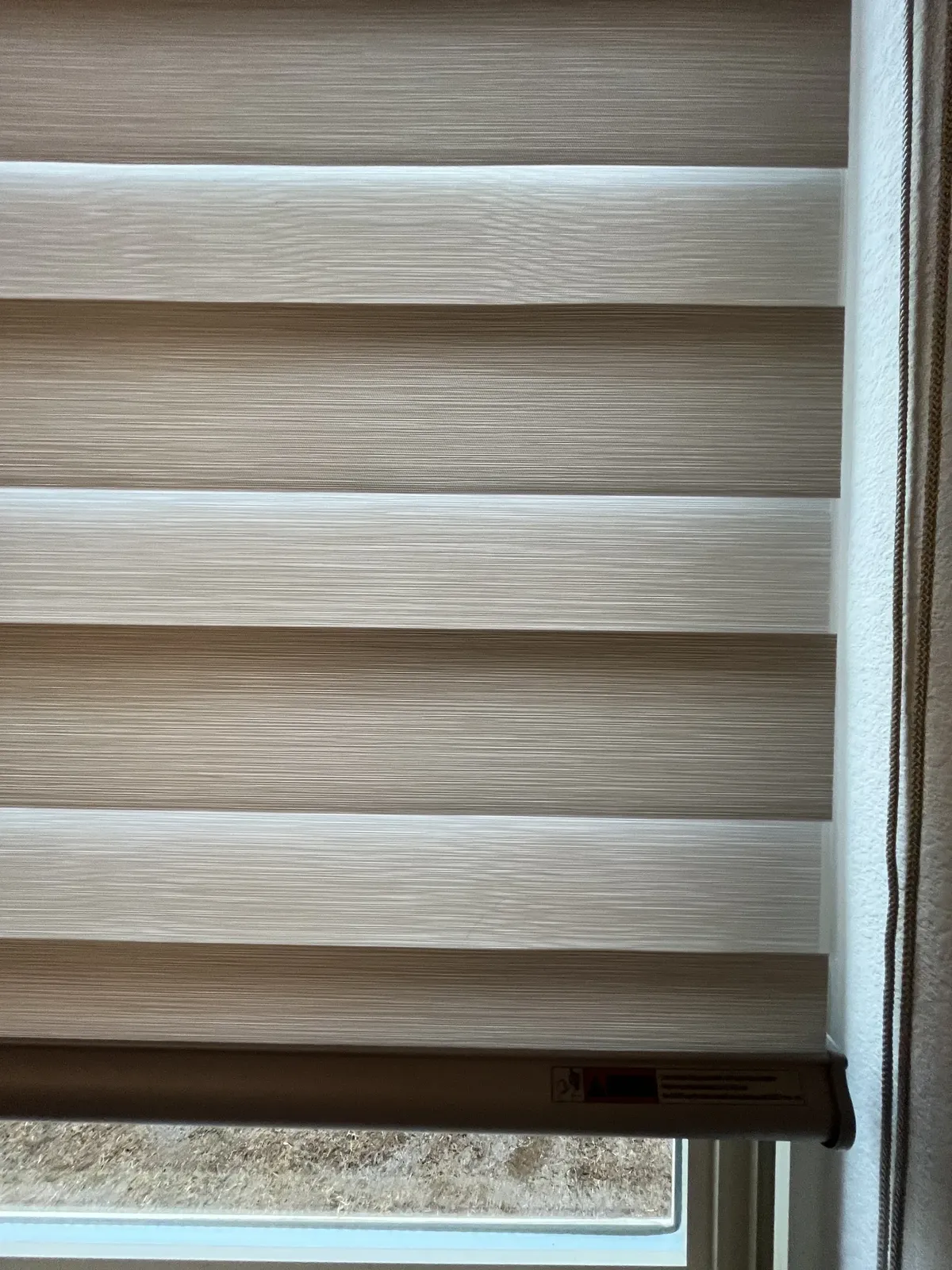
A zebra shade (also called a dual shade or day-night shade) is one continuous loop of fabric with alternating sheer and solid bands. When the solid bands line up, the room gets privacy. Move the shade a few inches and the sheer bands line up instead, so filtered daylight comes in while the shade stays down. Raise it all the way and it rolls up into the headrail.
People choose zebras for that in-between position. In a living room that faces the street you can keep people from seeing in during the afternoon and still have daylight, without raising anything. They also work in bedrooms that don’t need to be fully dark.
Product page: Zebra Shades
Roller shades
A roller shade is a single panel of fabric on a tube, raised and lowered as one piece. With no bands to adjust, the fabric you pick sets the light level for the whole window.
When it is up, a roller shade winds into a small roll at the top of the window, so a large window keeps its full view. Rollers look clean on long runs of windows and in rooms with a lot of glass.
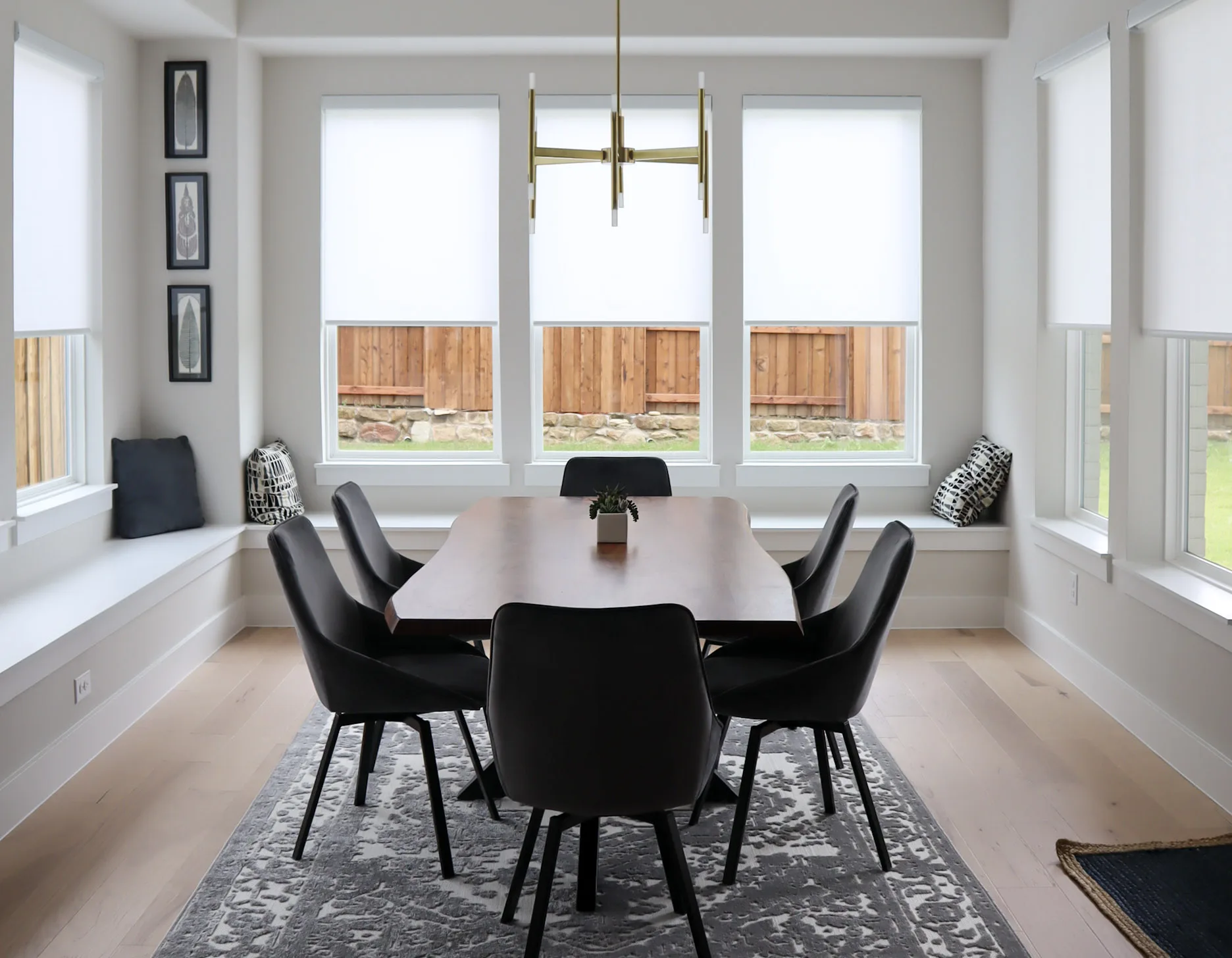
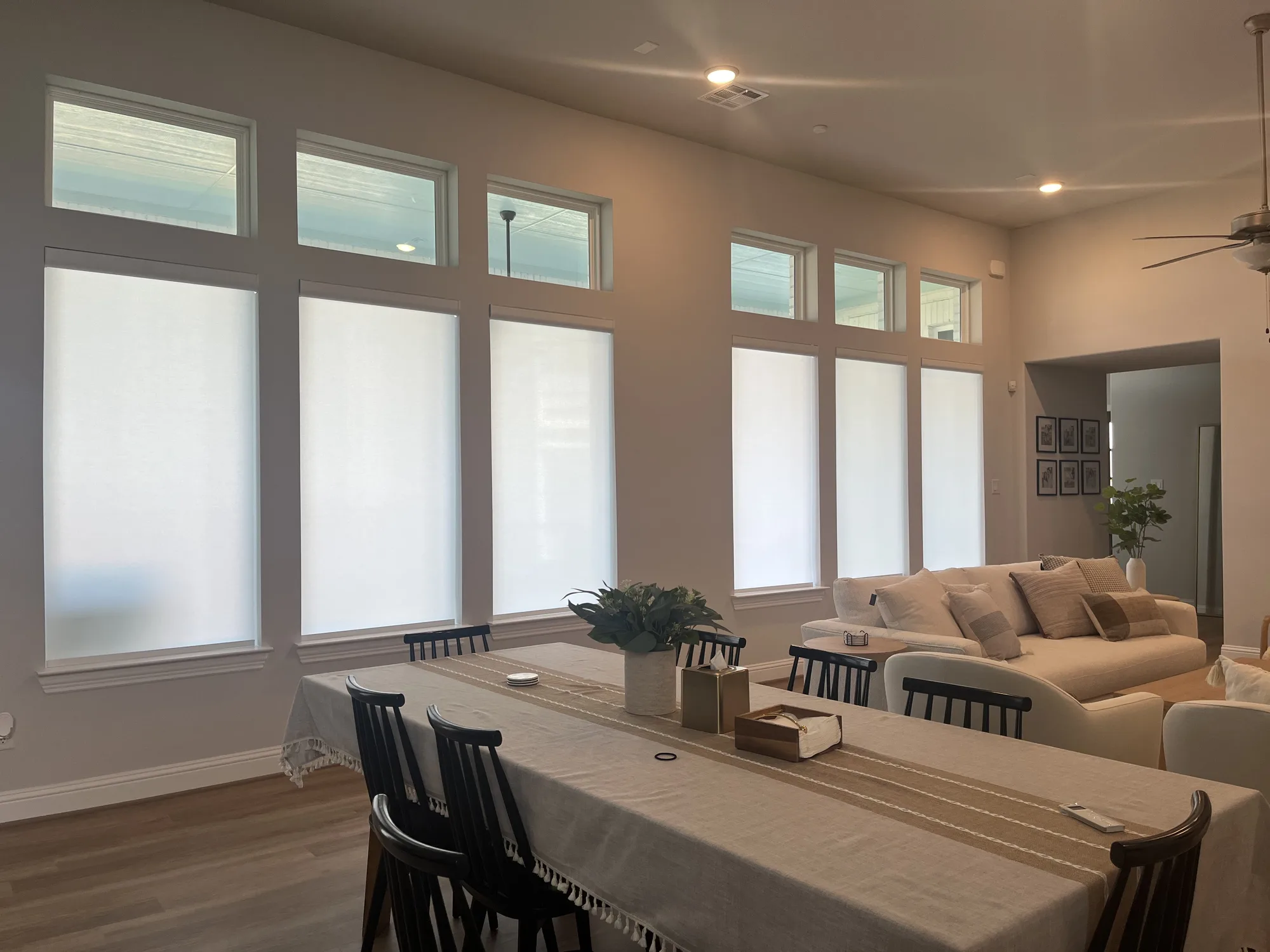
Roller fabrics come in three groups: light-filtering, blackout, and sunscreen. Step 2 below covers how to choose between the first two.
Product pages: Roller Shades and Blackout Roller Shades
Sunscreen
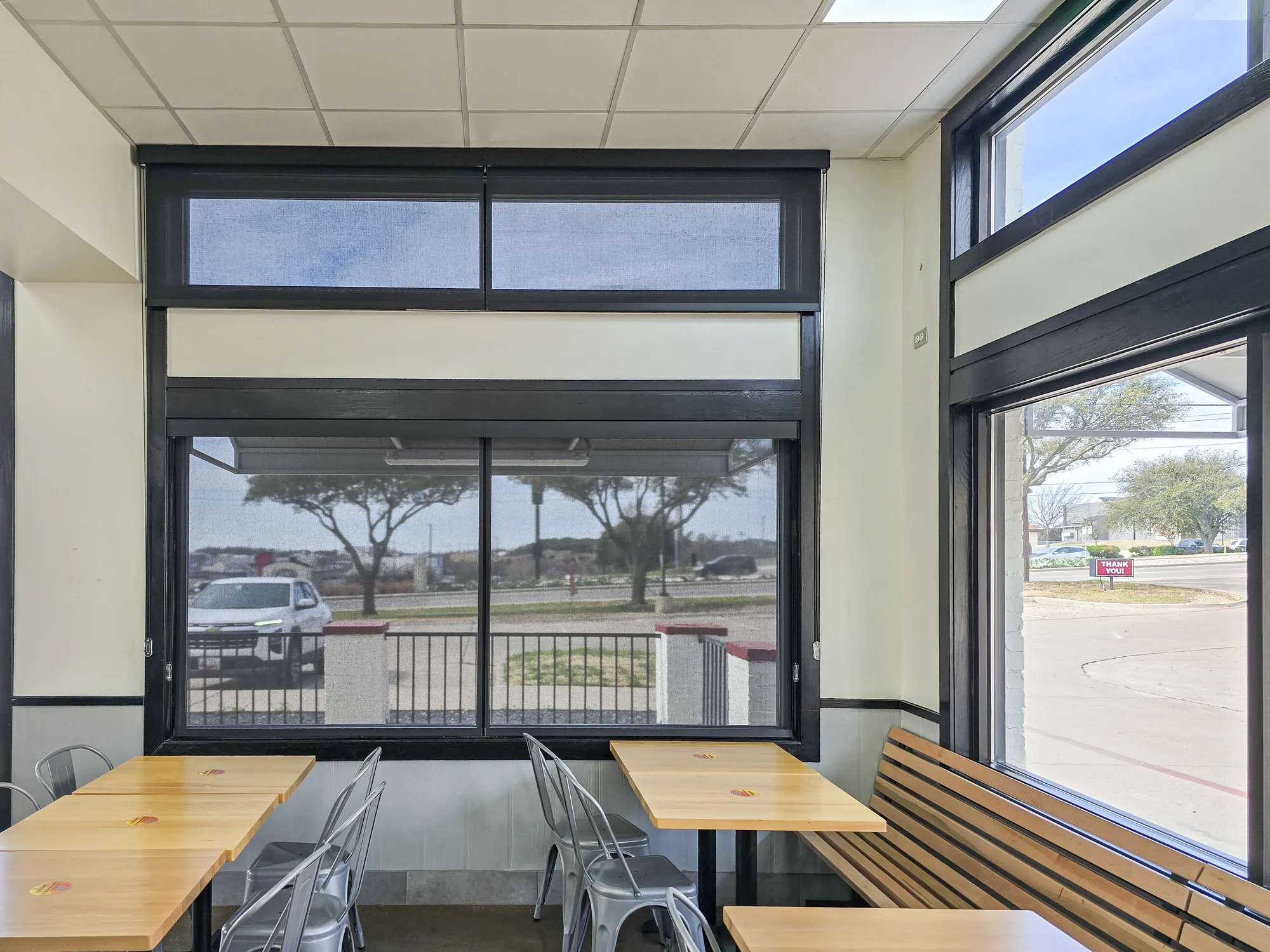
Our sunscreen, often called solar shades, is a roller shade with an open-weave screen fabric in 1% or 3% openness. During the day it cuts glare while you can still see out and people outside can’t see in, which suits backyard-facing living rooms, offices, and storefronts. At night with the lights on it turns see-through, so bedrooms need a different fabric.
Other shades
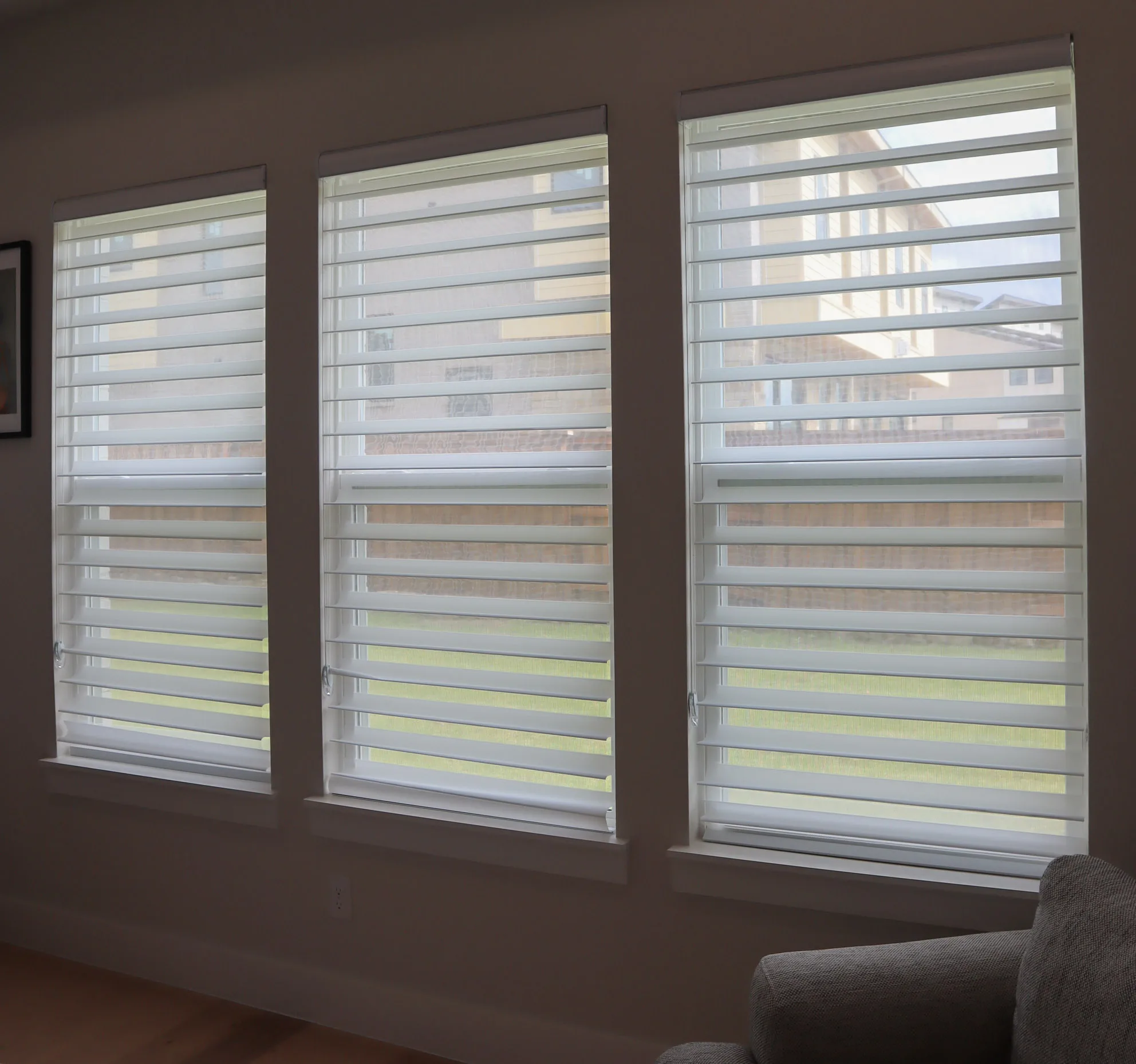
Triple shades look like a sheer curtain with soft fabric vanes inside it. The vanes tilt open for a filtered view or close for privacy, and the whole shade rolls up when you want the window bare. They give a finished, soft look to a master bedroom or a formal living room. Triple Shades
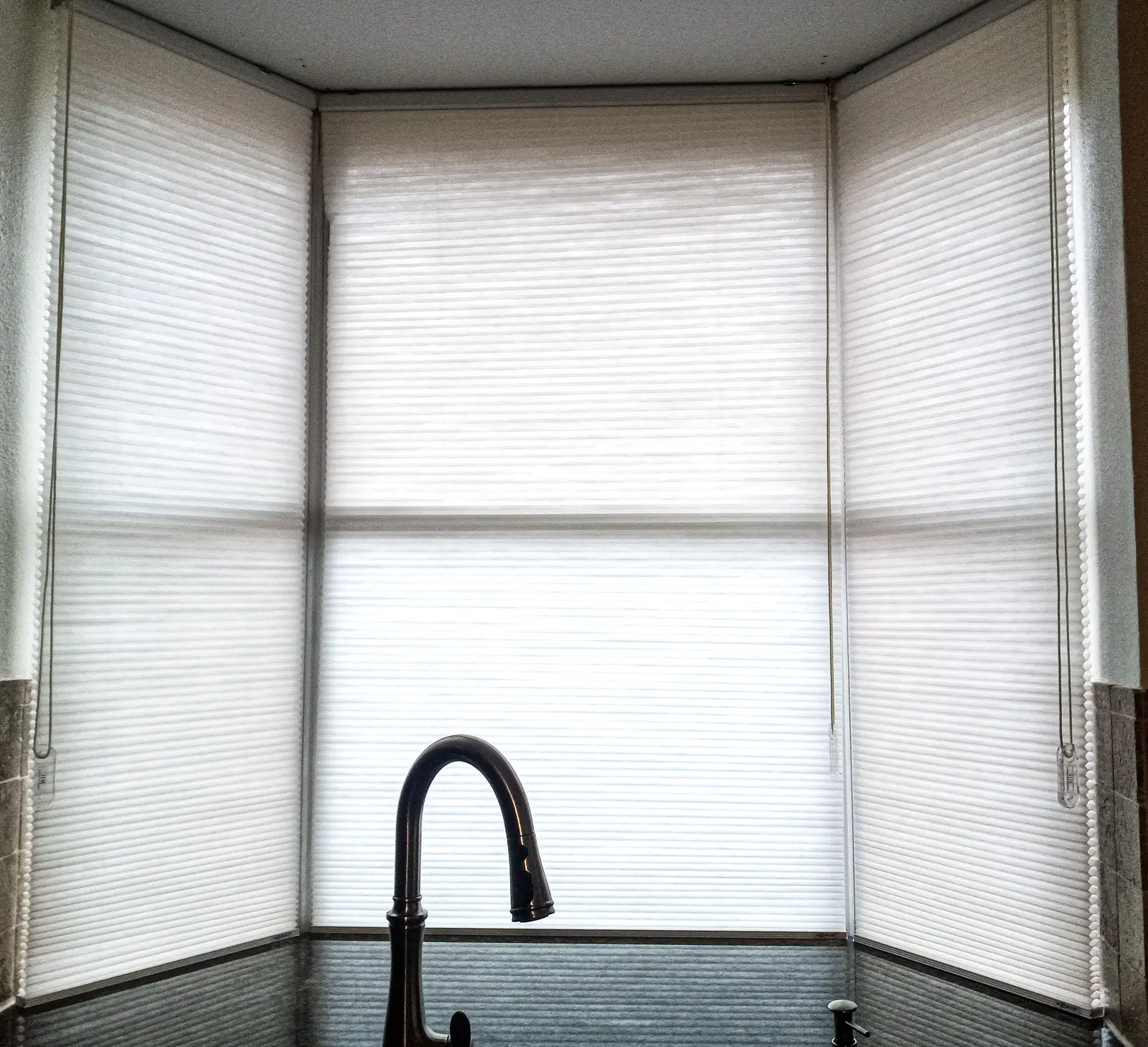
Honeycomb shades, also called cellular shades, are folded into pockets that hold a layer of air against the glass. They insulate better than any other shade, which helps on a window where heat coming through the glass is the main complaint. Honeycomb Shades
Roman shades are flat panels of fabric that gather into soft folds as they rise. Of all the shades they look the most like drapery, and they are often chosen to match the curtains in the same room. Roman Shades

How to choose
Step 1. Zebra or roller shades
If you want to adjust the light without raising the shade, choose zebra. If the window is mostly open or closed, or the room needs one fixed light level, choose roller. You don’t have to pick one for the whole house: zebras in the living areas with rollers in the bedrooms works well in a lot of homes.
If neither fits, look at the other shades above: sunscreen for daytime glare, triple or Roman shades for a softer look, and honeycomb shades for heat coming through the glass.
Step 2. Light-filtering or blackout
Decide this room by room. Light-filtering fabric softens daylight and gives privacy during the day, which suits living rooms and kitchens. Blackout fabric is for bedrooms and media rooms, or anywhere you want the room dark in the middle of the afternoon.
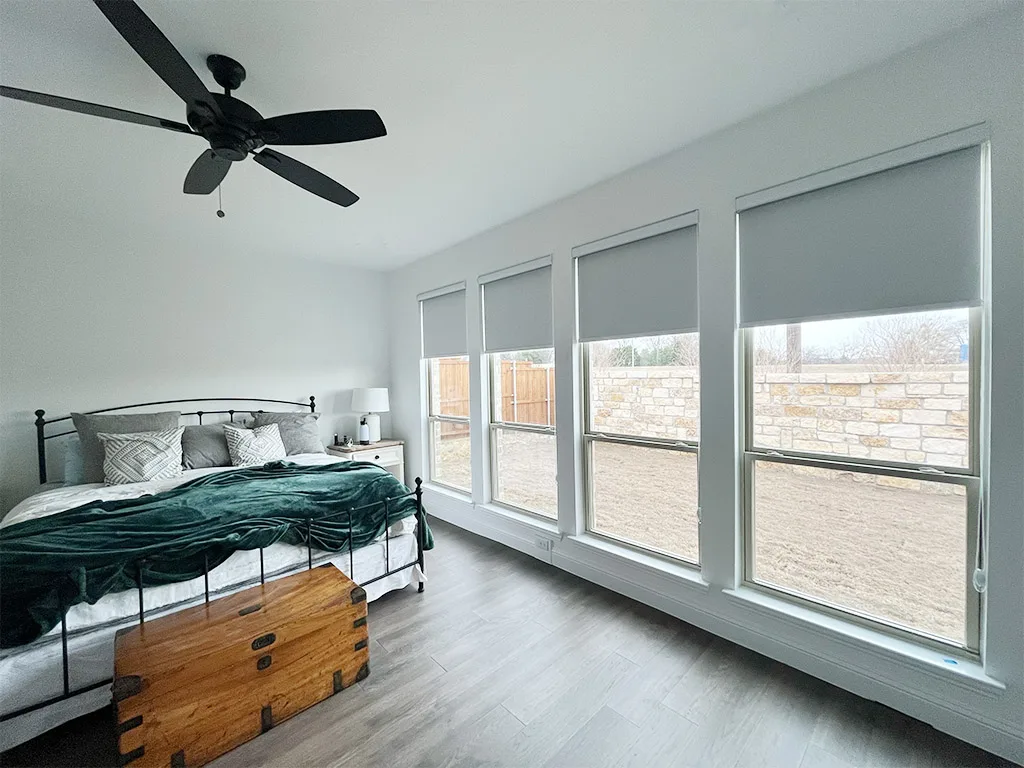
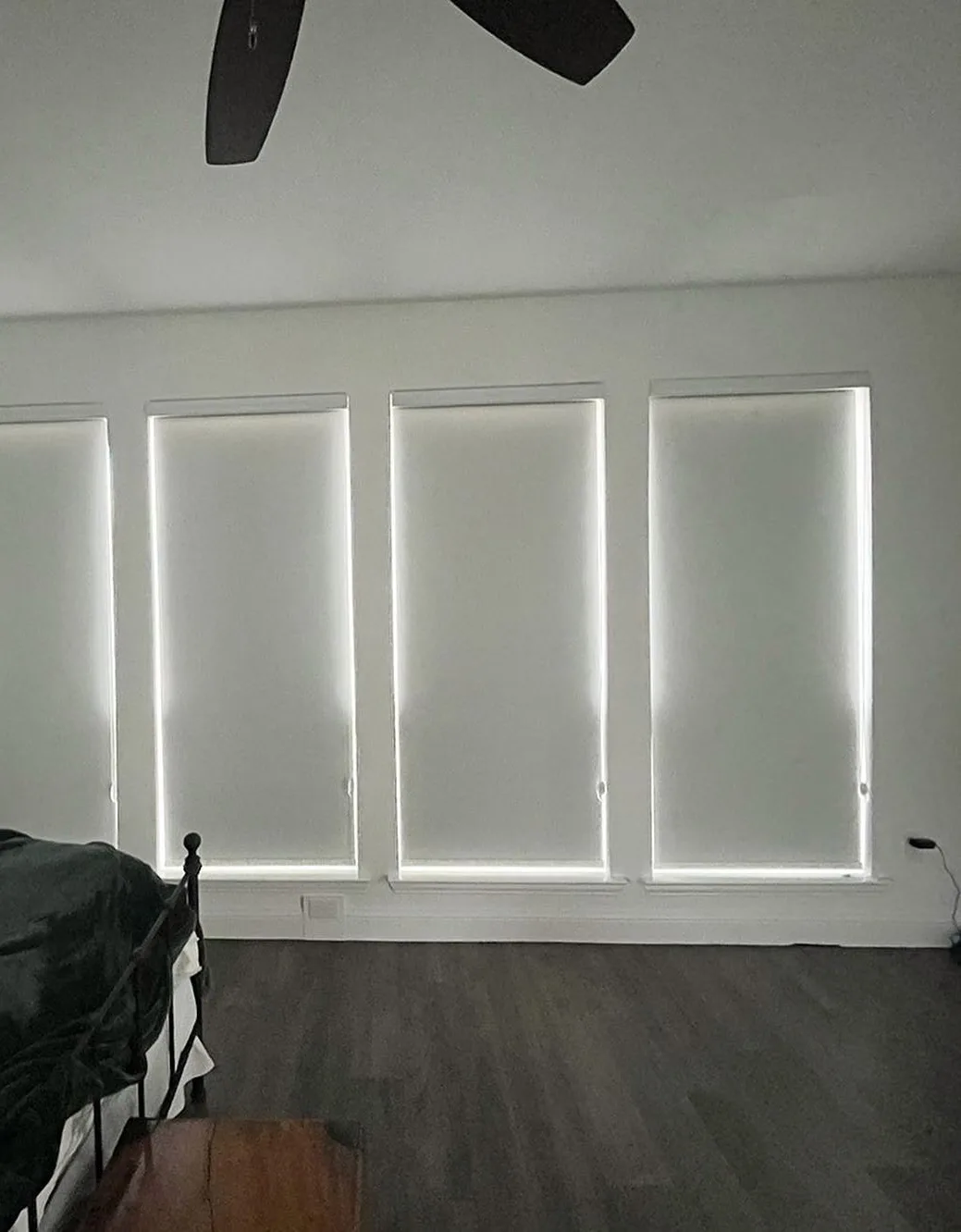
For the darkest result, choose a blackout roller shade. Mounted outside the window frame, it also covers the gaps at the edges where light leaks in. A blackout zebra shade gives most bedrooms enough room darkening, but a thin line of light still comes through the sheer bands.
Step 3. Motorized or chain
A chain is simple and works fine on any window you can reach. A motor makes sense for windows you can’t reach, such as the upper row in a two-story living room, and for a long row of shades you would otherwise raise one at a time. A motor also leaves no loose chain hanging by the window. Decide on a motor before you order, because adding one later usually means replacing the shade.
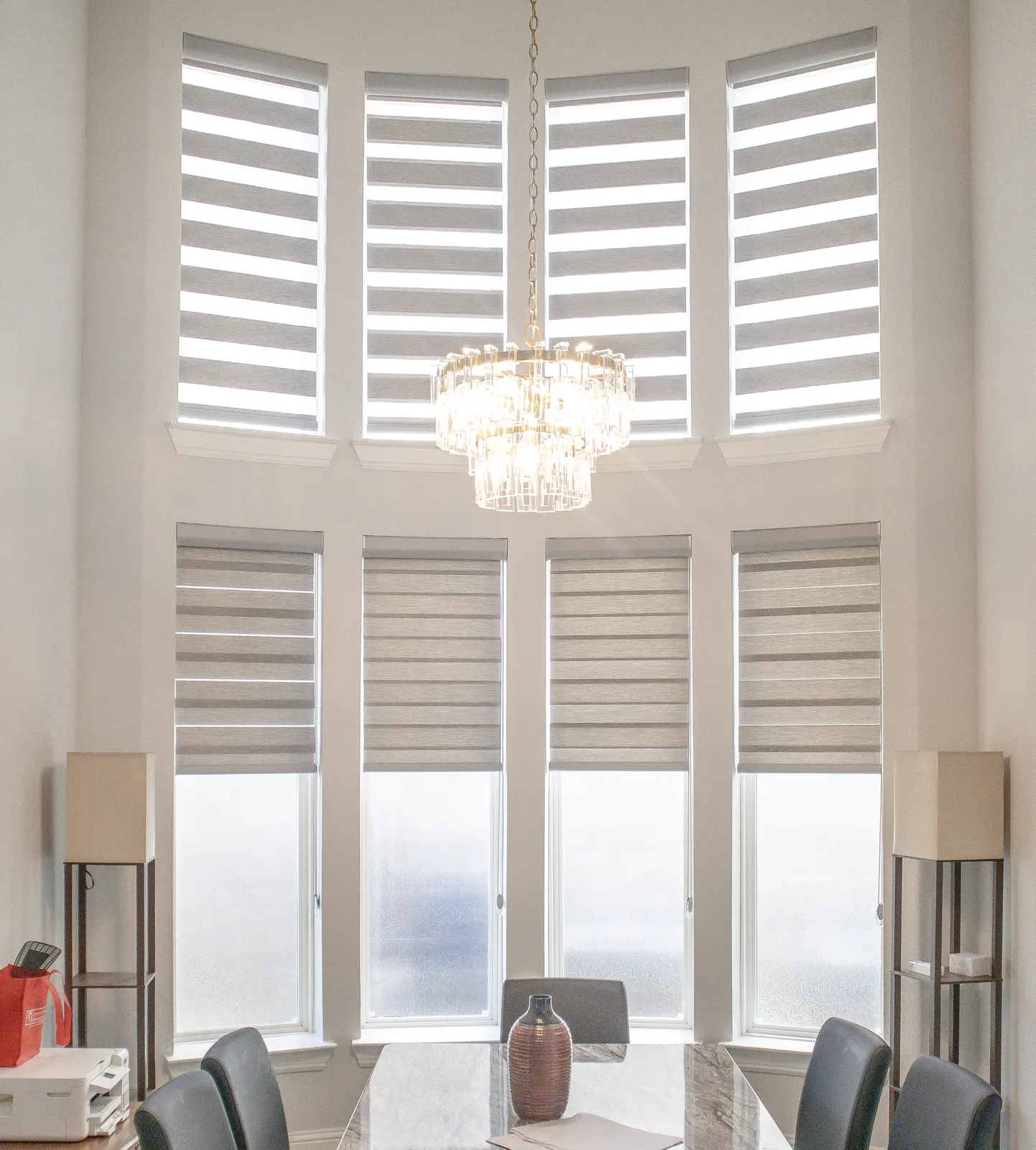
Product page: Motorized
Step 4. Fabric pattern and texture
Most shades are a solid color, and the texture is what keeps them from looking flat. A woven, linen-like texture feels warm, while a smoother fabric looks crisper against modern trim. Pattern is a bigger decision because it turns the shade into the focal point, so it works best on a single window such as a dining room window.
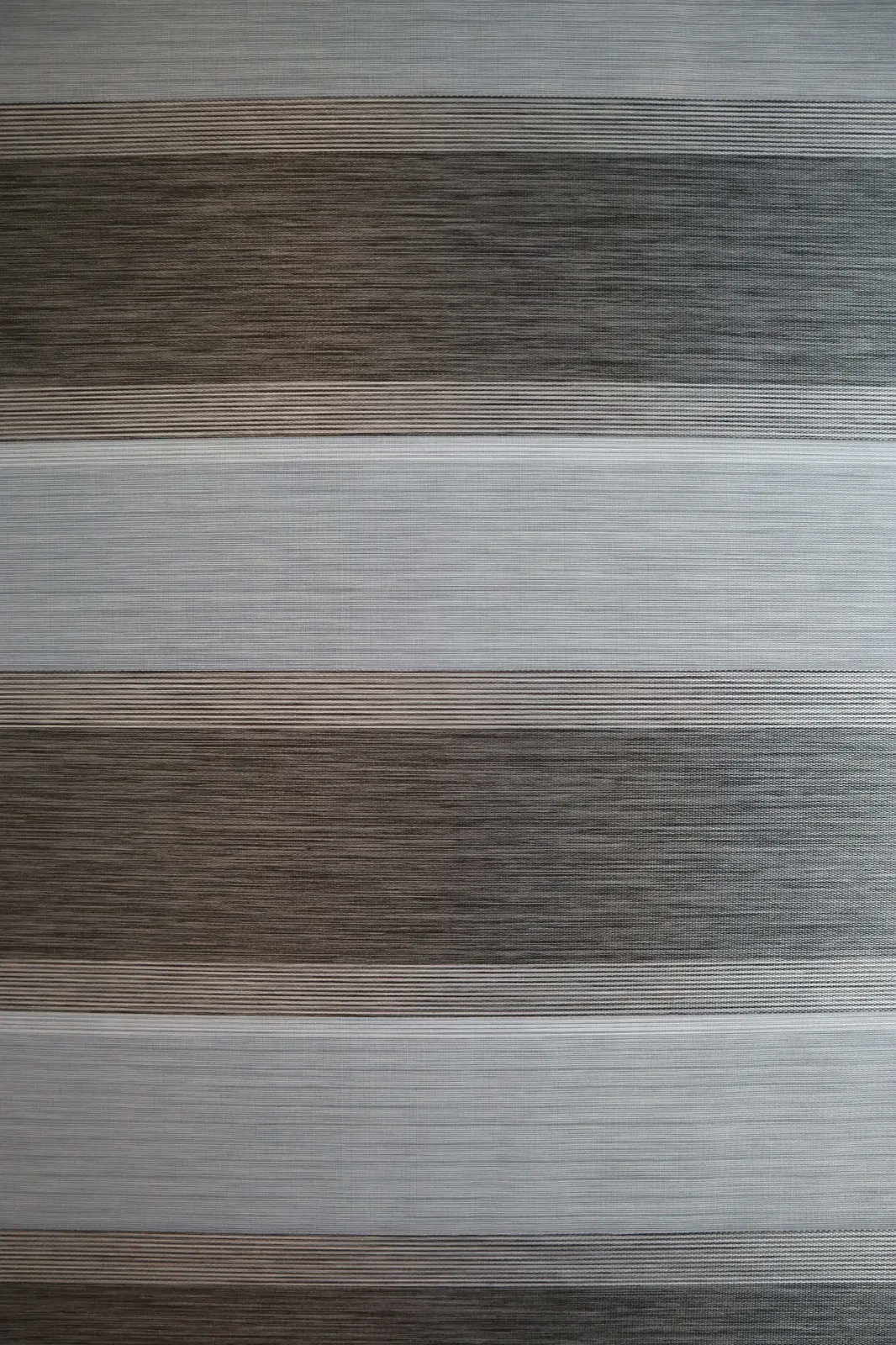
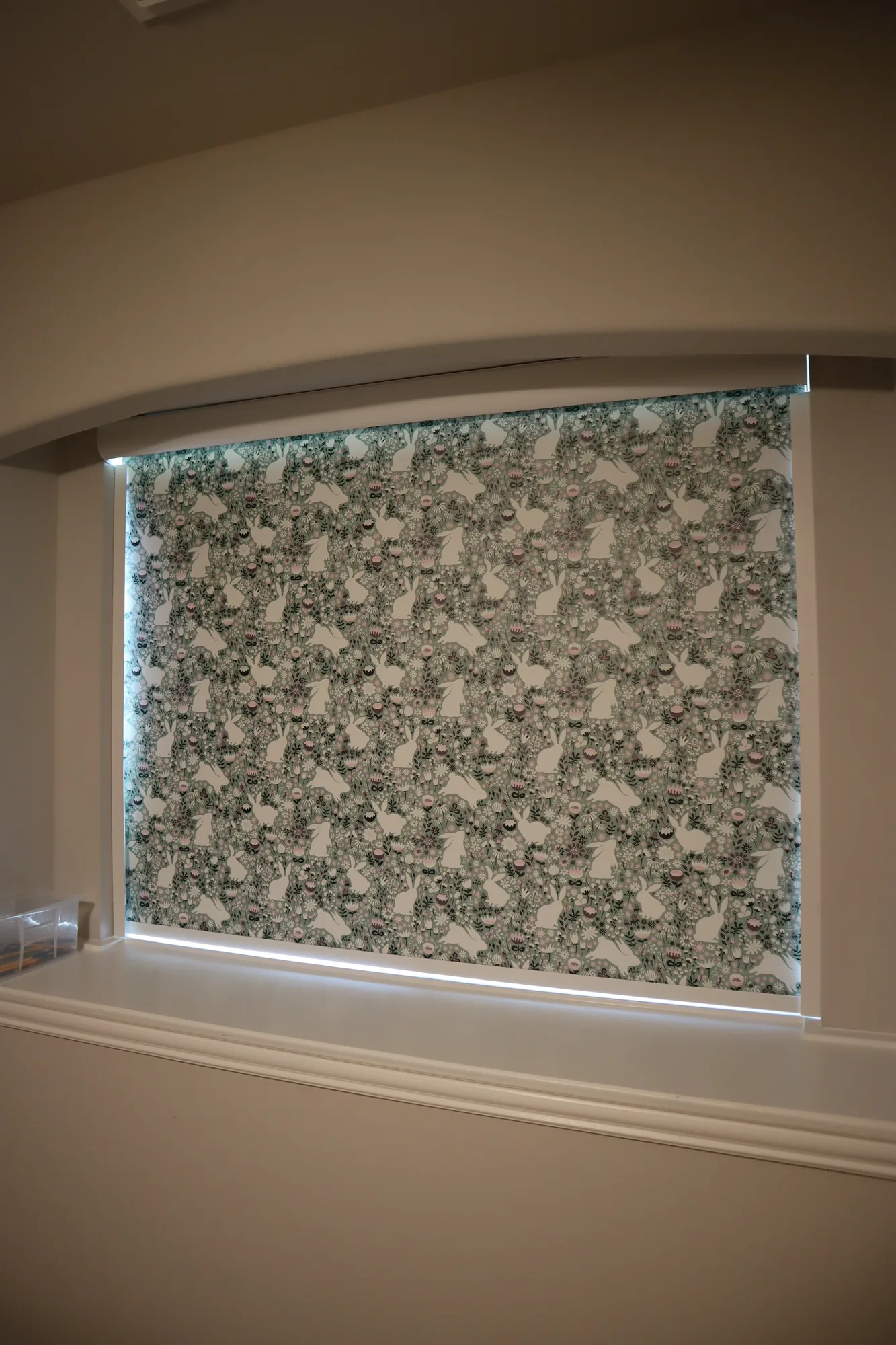
If you can, hold the samples up to your own window in the afternoon, when the sun is behind them.
Step 5. Color
White and off-white shades blend into most window trim and keep a room bright. Grey and beige pick up the tone of the walls and floors, and a dark color like navy becomes part of the room’s color scheme.
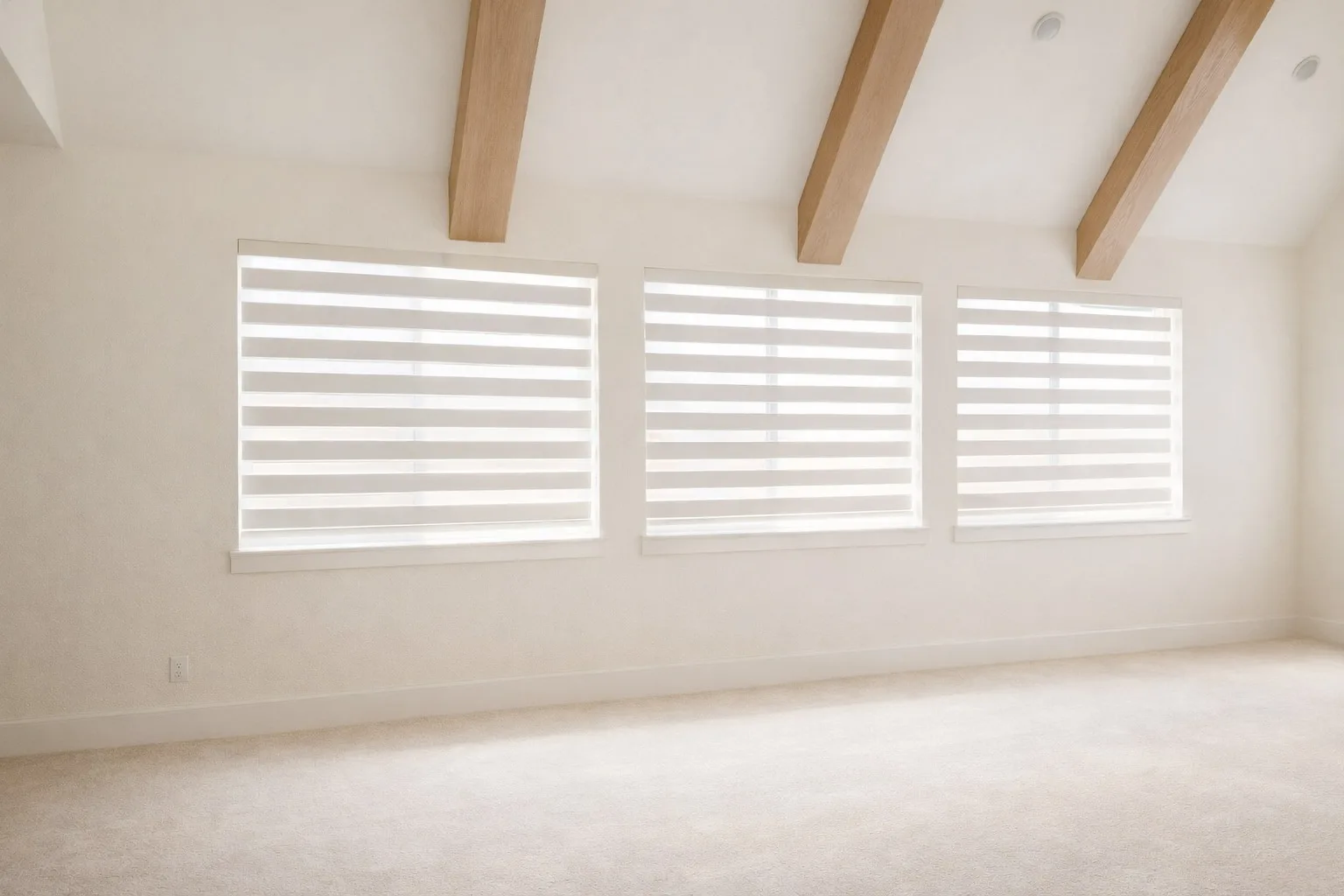
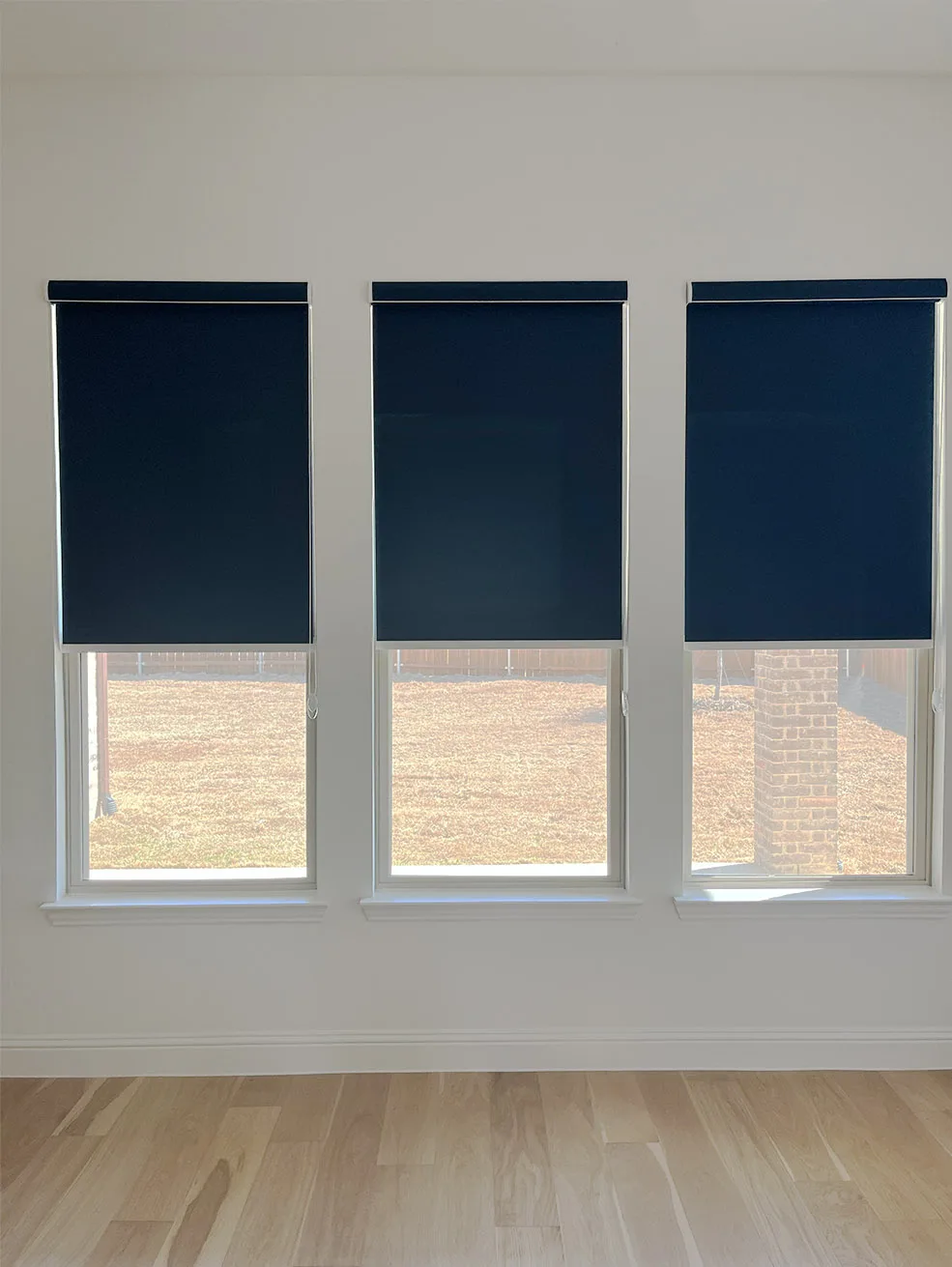
Keep the outside of the house in mind too. The back of every shade faces the street, and windows that match look neater from the curb than a mix of colors.
Not sure yet?
Bring a photo of the room to any of our showrooms across DFW, or request a free in-home consultation and we’ll bring samples to your windows. You can also call (972) 998-5824.